Backup Modes for Irregular LED Screens
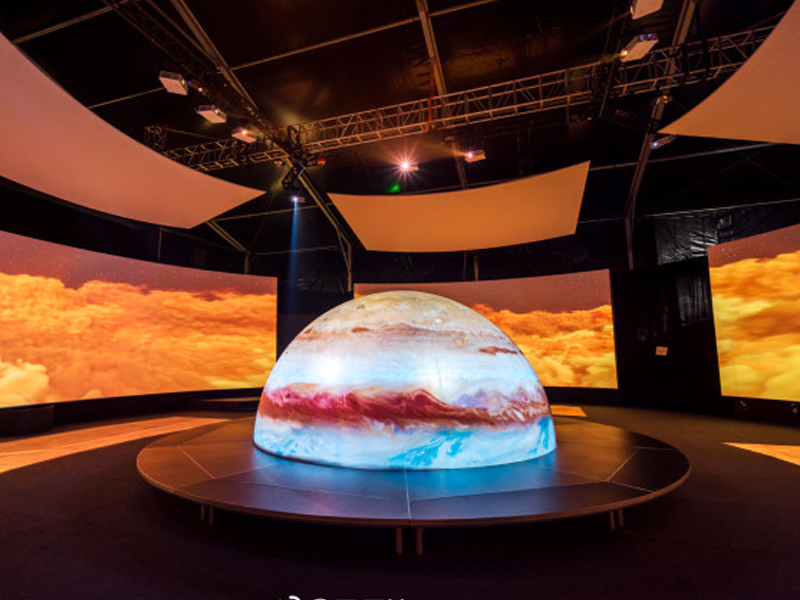
Irregular LED displays usually require far more advanced backup systems than conventional flat LED screens.
Because these creative LED structures feature complex shapes, dense internal layouts, and difficult maintenance access, even a small hardware failure can seriously affect the entire visual experience.
Therefore, backup systems play a critical role in ensuring continuous operation and uninterrupted display performance.
The core purpose of a backup mode is simple: when one component fails, the system automatically switches to a backup path or backup device so the screen can continue operating without visible interruption.
1. Signal Loop Backup
Signal loop backup, also called loop redundancy, is currently the most common backup solution for irregular LED displays.
How It Works
In this design, the signal path forms a closed loop:
Sending Card → Receiving Cards → LED Modules → Back to the Sending Card
If one signal cable breaks or one section fails, the system automatically reroutes the signal from the opposite direction.
Why It Matters for Irregular LED Screens
Irregular LED displays usually contain complicated cable routing because their module layouts do not follow standard rectangular structures.
As a result, a single cable failure could otherwise cause a large section of the screen to go black.
Signal loop backup prevents this problem by providing an alternate signal path automatically.
Main Advantages
- Automatic fault bypass
- No visible interruption during switching
- Improved reliability for complex structures
- Ideal for hard-to-maintain installations
Typical Applications
This solution has become the standard configuration for:
- Spherical LED screens
- Dome displays
- Ceiling LED canopies
- Immersive LED rooms
- Large curved LED walls
Especially in installations with minimal maintenance space, loop backup becomes extremely important.
2. Dual Receiving Card Backup
Dual receiving card backup adds another layer of protection to critical display areas.
How It Works
Each display section uses:
- One primary receiving card
- One backup receiving card
If the primary card fails, the backup card immediately takes over.
Switching Speed
The transition usually occurs within milliseconds, allowing viewers to experience virtually no visible interruption.
Applications in Irregular LED Screens
Large immersive LED projects often use dual-card redundancy in critical viewing zones, including:
- Giant sphere screens
- Broadcast studios
- Immersive exhibition halls
- High-end stage productions
Main Characteristics
| Feature | Description |
|---|---|
| Reliability | Very high |
| Switching | Seamless hot backup |
| Cost | Higher |
| Best Use | High-end projects and critical display zones |
3. Power Supply Backup
Power redundancy protects the LED display against power supply failures.
How It Works
The system uses:
- Dual power supplies
- Parallel power configurations
- UPS backup systems
- N+1 redundant power architectures
If one power supply fails, the secondary unit immediately continues providing power.
Why It Is Important for Irregular LED Screens
Irregular LED cabinets often contain:
- Compact internal spaces
- Limited airflow
- Higher operating temperatures
Because of these conditions, power supplies may experience greater thermal stress compared with conventional flat screens.
Therefore, power backup becomes especially critical.
Benefits
- Prevents partial blackouts
- Improves system stability
- Supports continuous operation
- Reduces maintenance risks
4. Pixel-Level Backup
Pixel-level redundancy represents one of the most advanced backup technologies in the LED display industry.
How It Works
During PCB design, engineers reserve:
- Backup LED chips
- Extra driver channels
- Redundant signal paths
If one LED or driver channel fails, the backup component automatically replaces it.
Technical Implementations
Manufacturers may use:
- Dual-chip LED packaging
- Redundant driver IC channels
- Automatic failover circuits
Typical Applications
Because of the extremely high cost, pixel-level backup mainly appears in:
- Television studios
- Premium stage rental systems
- Permanent artistic LED installations
- Mission-critical visual systems
Main Advantage
This solution can achieve near “zero-visible-failure” performance, even at the single-pixel level.
Special Backup Design Considerations for Irregular LED Screens
Irregular LED displays require more customized redundancy designs than standard flat screens.
Complex Signal Routing
Because module layouts are irregular, engineers must carefully design loop backup paths to avoid signal latency differences and synchronization issues.
Limited Maintenance Access
Many sphere screens and immersive installations cannot support rear maintenance access.
Therefore, backup systems must support:
- Front maintenance
- Hot-swappable components
- Fast replacement procedures
Customized Cabinet Structures
Triangle cabinets, trapezoid cabinets, and curved modules leave very limited internal space.
As a result, engineers must custom-design the physical placement of:
- Dual power supplies
- Backup receiving cards
- Redundant cables
Brightness and Color Consistency
Before switching occurs, the primary and backup systems must already share identical calibration data.
Otherwise, brightness or color shifts may appear during failover switching.
Recommended Backup Configurations
| Project Type | Recommended Backup Solution |
|---|---|
| Small irregular LED screens (<20㎡) | Signal loop backup + high-quality power supply |
| Medium and large immersive projects | Loop backup + dual receiving card backup |
| TV studios and stage rental systems | Full redundancy: loop + dual card + power backup |
| Permanent outdoor artistic installations | Loop backup + redundant power + pixel-level backup |
Conclusion
Signal loop backup serves as the core redundancy solution for most irregular LED displays. When combined with dual receiving card systems and power redundancy, it creates a multi-layer protection architecture that greatly improves system reliability.
For irregular LED screens, uninterrupted operation matters even more than it does for conventional flat screens. A local blackout on a sphere screen, curved wall, or immersive display can severely damage the entire visual effect.
Therefore, modern irregular LED projects increasingly rely on comprehensive backup systems to ensure stable, continuous, and seamless visual performance.


