Can-Shaped LED Display Installation: Structure, Calibration and Maintenance
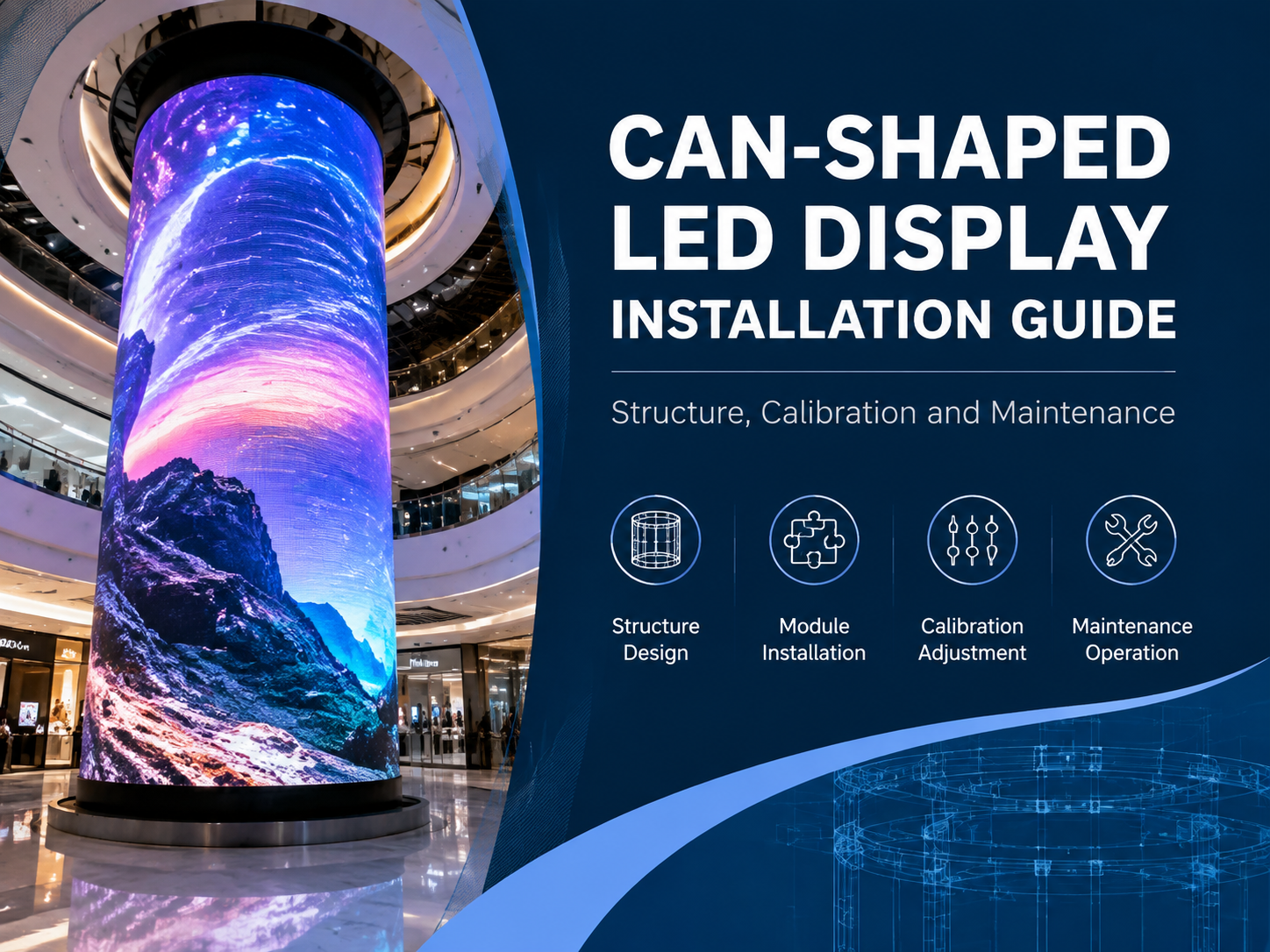
Introduction: A Professional Guide to Can-Shaped LED Display Installation
A Can-Shaped LED Display Installation requires much more than mounting LED modules onto a frame. Unlike traditional flat LED screens, a can-shaped LED screen uses a cylindrical structure, customized modules, and precise control technology to create a seamless curved visual effect.
Because of its unique shape, the installation process involves several important stages, including structural design, LED module assembly, signal connection, pixel calibration, and long-term maintenance.
For companies planning a creative LED project, choosing an experienced custom LED display manufacturer helps ensure stable performance and reliable technical support.
Can-Shaped LED Display Installation Process Explained
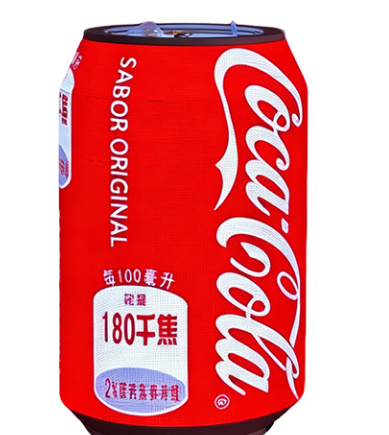
The installation of a Can-Shaped LED Display usually includes four main steps:
- Structure preparation
- LED module assembly
- System connection
- Calibration and testing
Compared with normal LED walls, a cylindrical LED display requires more accurate engineering because every module follows a curved surface.
1. Pre-Installation Planning for a Can-Shaped LED Screen
Before starting the installation, engineers need to evaluate the application environment and project requirements.
Installation Location Assessment
The installation environment directly affects the screen design.
Important factors include:
- Indoor or outdoor application
- Viewing distance
- Brightness requirements
- Maintenance space
- Power supply conditions
For example:
Indoor shopping malls and exhibition spaces usually require high-resolution displays for close viewing.
Outdoor applications require stronger protection and higher brightness.
Choosing the Right Pixel Pitch
Pixel pitch is one of the most important factors when selecting a Can-Shaped LED Display.
For close viewing:
- P1.5 LED display
- P1.8 LED display
are suitable choices.
For larger viewing distances:
- P2.5
- P3
- P4
may provide better cost efficiency.
The correct pixel pitch improves:
- Image clarity
- Viewing experience
- Project value
2. Cylindrical Structure Design for Can-Shaped LED Displays
The biggest difference between a traditional LED wall and a Cylindrical LED Display is the customized mechanical structure.
A reliable structure ensures:
- Stable curved surface
- Accurate module positioning
- Long-term operation
Customized Support Frame
The support structure usually contains:
- Aluminum frame
- Circular support system
- Module fixing brackets
- Maintenance access design
The frame needs to support the screen weight while keeping the cylindrical shape accurate.
Curved LED Module Arrangement
Unlike flat LED panels, a special-shaped LED display requires customized module installation.
Technicians need to control:
- Module alignment
- Surface smoothness
- Connection gaps
Incorrect installation may cause:
- Uneven brightness
- Visible module lines
- Image distortion
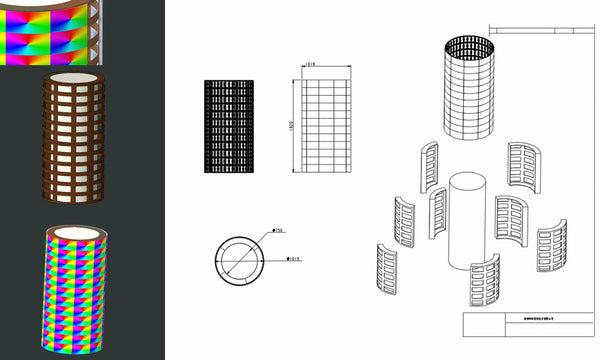
3. Custom LED Display Installation Steps
A professional custom LED display installation follows a systematic process.
Step 1: Installing the Support Structure
The frame is installed according to engineering drawings.
Technicians check:
- Structural strength
- Vertical alignment
- Safety conditions
A stable structure provides the foundation for reliable operation.
Step 2: Installing LED Modules
After completing the frame, LED modules are installed onto the curved surface.
During assembly, technicians ensure:
- Correct module position
- Smooth curved appearance
- Consistent spacing
This step directly affects the final display quality.
Step 3: Connecting Power and Control Systems
A complete LED display system includes:
- LED modules
- Power supply
- Receiving cards
- Video processor
- Control software
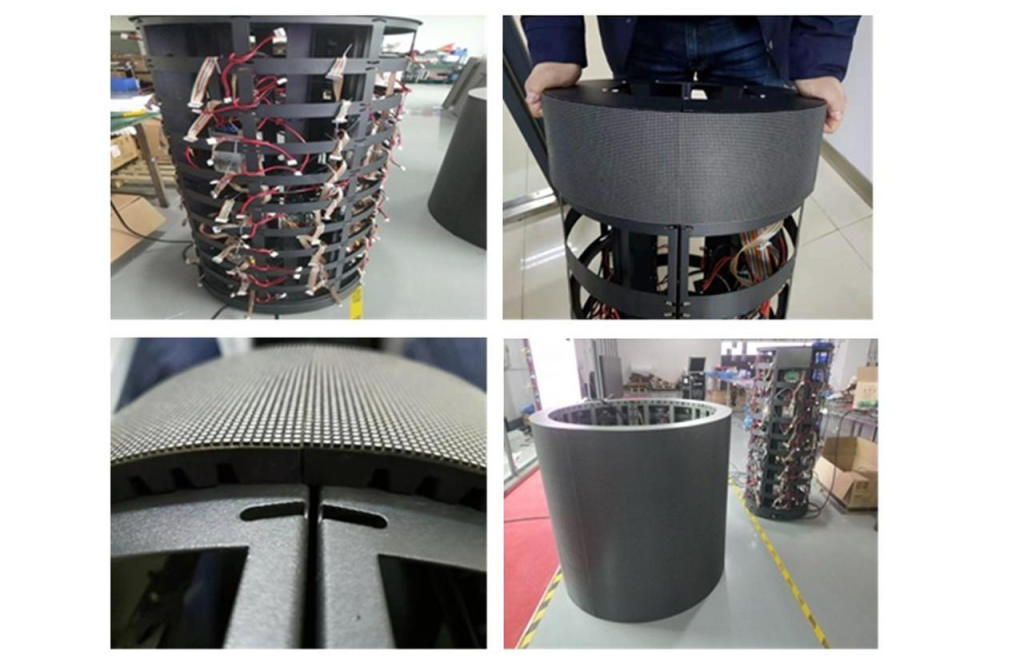
For curved LED screens, the control system is especially important because it manages image mapping and signal processing.
Learn more about display control technology through our guide:
4. Pixel Calibration for Curved LED Screens
After installation, calibration is required to achieve the best visual performance.
Because of the curved surface, a Curved LED Screen Installation requires more adjustment compared with a standard LED wall.
Brightness and Color Correction
Professional calibration helps maintain:
- Equal brightness
- Accurate colors
- Smooth image quality
Pixel Mapping Technology
A cylindrical LED display needs pixel mapping to match the physical structure.
This prevents:
- Image distortion
- Incorrect proportions
- Uneven visual effects
Pixel mapping is one of the key technologies used in modern creative LED displays.
5. Can-Shaped LED Display Maintenance Guide
Proper maintenance is important for extending LED screen lifespan.
A complete LED display maintenance plan includes:
Regular Inspection
Operators should check:
- LED modules
- Power cables
- Signal connections
- Brightness performance
Module Replacement
Depending on the project design, maintenance can use:
- Front service
- Rear service
Professional manufacturers consider maintenance access during the design stage.
Software and System Maintenance
Regular checking of:
- Control software
- Processor settings
- System parameters
helps maintain stable operation.
6. Common Problems During Can-Shaped LED Display Installation
| Problem | Cause | Solution |
|---|---|---|
| Uneven brightness | Calibration issue | Perform brightness correction |
| Image distortion | Incorrect mapping | Adjust processor settings |
| Visible gaps | Module alignment problem | Reinstall modules |
| Screen instability | Weak structure | Improve support design |
7. Why Choose TOOSEN for Can-Shaped LED Display Projects?
A successful Can-Shaped LED Display Installation requires professional engineering, manufacturing experience, and technical support.
TOOSEN provides:
- Custom LED display design
- Cylindrical LED display solutions
- Creative shaped LED screen manufacturing
- Installation guidance
- Technical support
Explore our solutions:
Conclusion
A Can-Shaped LED Display Installation involves much more than assembling LED modules.
The structural design, curved module arrangement, pixel calibration, and maintenance planning all influence the final performance.
Compared with traditional LED screens, cylindrical and special-shaped LED displays create stronger visual impact but require professional engineering.
Working with an experienced custom LED display manufacturer helps businesses achieve a stable, seamless, and long-lasting creative display solution.
FAQs
1. How is a Can-Shaped LED Display installed?
The installation includes structural assembly, LED module installation, power connection, calibration, and final testing.
2. What makes cylindrical LED display installation different?
A cylindrical LED display requires curved module arrangement and special pixel mapping technology.
3. How often should a Can-Shaped LED Display be maintained?
Regular inspection of modules, cables, and control systems helps maintain stable performance.
4. Which pixel pitch is suitable for a Can-Shaped LED Screen?
The best pixel pitch depends on viewing distance. P1.5 is suitable for close viewing, while larger pitches work better for larger spaces.


