Does an Indoor Fixed LED Screen Need a Support Structure?
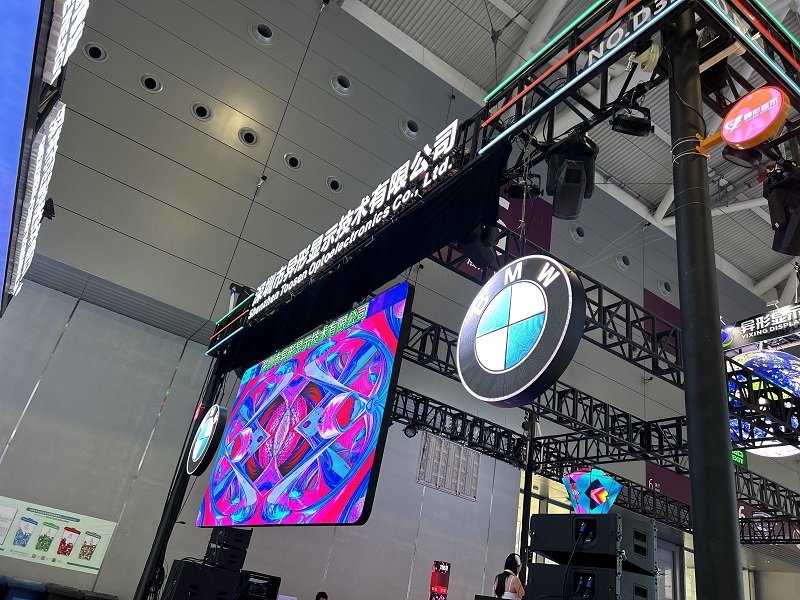
In most cases, yes — indoor fixed LED displays require a support structure or steel frame.
The exact structure depends on the installation method, screen size, weight, and wall condition.
Even installations that appear to be “direct wall-mounted” usually still rely on metal brackets, steel frames, or mounting rails to support the screen safely.
Only very small LED displays, such as a single module or ultra-light mini screen, may attach directly to a wall. However, this is not considered a standard fixed LED installation.
Common Indoor LED Installation Methods and Structure Requirements
| Installation Method | Structure Requirement | Typical Applications |
|---|---|---|
| Wall-Mounted | Requires expansion bolts and steel frame made from angle iron or square tubing | The most common solution for concrete or solid walls |
| Recessed Installation | Requires pre-embedded steel structure and maintenance access frame | Conference rooms, exhibition halls, luxury interiors |
| Suspended Installation | Requires hanging rods, steel cables, or truss systems | Shopping malls, transportation hubs, high-ceiling spaces |
| Floor-Standing Installation | Requires floor base support or independent frame | Trade shows, temporary events, exhibition displays |
| Column-Mounted Installation | Requires vertical columns and rear support structure | Stage backdrops and standalone advertising displays |
Why Does an Indoor LED Screen Need a Support Structure?
1. Weight Bearing Requirements
LED displays are heavy.
Most indoor fixed LED screens weigh approximately 25–60 kg per square meter, while fine-pitch LED screens can weigh even more.
Because of this weight, installers cannot safely mount the screen directly onto drywall, hollow brick walls, or lightweight partitions. A steel structure distributes the load evenly and improves safety.
2. Screen Flatness and Alignment
A properly welded steel frame — usually made from 40×40 mm or 40×20 mm square steel tubing — keeps the installation surface perfectly flat.
This is extremely important because uneven structures can cause:
- Module misalignment
- Visible gaps
- Uneven seams
- Distorted display effects
A stable structure ensures seamless cabinet splicing and better visual performance.
3. Maintenance Access
Medium and large fixed LED displays require maintenance space, especially for rear-maintenance designs.
Typically, installers reserve:
- 80–120 cm maintenance depth
- Internal cable routing space
- Power supply access
- Lighting for servicing
Without a proper steel framework, technicians cannot safely access the rear components for repair or replacement.
4. Structural Safety
Not all walls can support an LED screen directly.
The following wall types usually require additional reinforcement:
- Hollow brick walls
- Gypsum board walls
- Lightweight partitions
- Decorative panel walls
In these cases, installers often choose:
- Independent steel structures
- Floor-standing systems
- Column-supported installations
This prevents wall deformation or installation failure over time.
Special Cases
Small Front-Maintenance LED Screens
For very small indoor LED screens — typically under 6㎡ and with relatively low total weight — installers may use expansion bolts and mounting brackets directly on a solid concrete wall.
However, metal mounting components are still necessary.
Magnetic LED Modules
Many fine-pitch LED displays use magnetic modules for easier maintenance.
In this design:
- The modules attach magnetically
- But the steel frame behind them remains essential
The magnets only secure the modules to the structure; they do not replace the support system itself.
Installation Recommendations
Before installing an indoor fixed LED screen, always:
Check the wall’s load-bearing capacity
Concrete walls and steel structures are ideal. Lightweight walls usually require reinforcement.
Calculate the total screen load
Formula:
Total Load = Screen Area × Unit Weight
Remember to include:
- Power supplies
- Cables
- Control systems
- Cabinet weight
Reserve enough maintenance space
Proper maintenance access improves long-term reliability and reduces repair difficulty.
Use a professional installation team
Professional structural design and installation greatly improve safety, flatness, and overall display performance.
About Toosen LED
Toosen has 12 years of experience manufacturing customized LED display solutions for indoor and outdoor applications.
Toosen provides:
- Custom-size LED displays
- Wall-mounted and floor-standing structure solutions
- Structural drawings and installation guidance
- Front and rear maintenance designs
- Free remote debugging and technical support
- 72-hour aging tests before shipment
- 2-year warranty and lifetime technical support
With professional engineering support and reliable manufacturing, Toosen helps customers complete LED display installations safely and efficiently.


