How Irregular LED Screens Use Synchronous and Asynchronous Control Systems
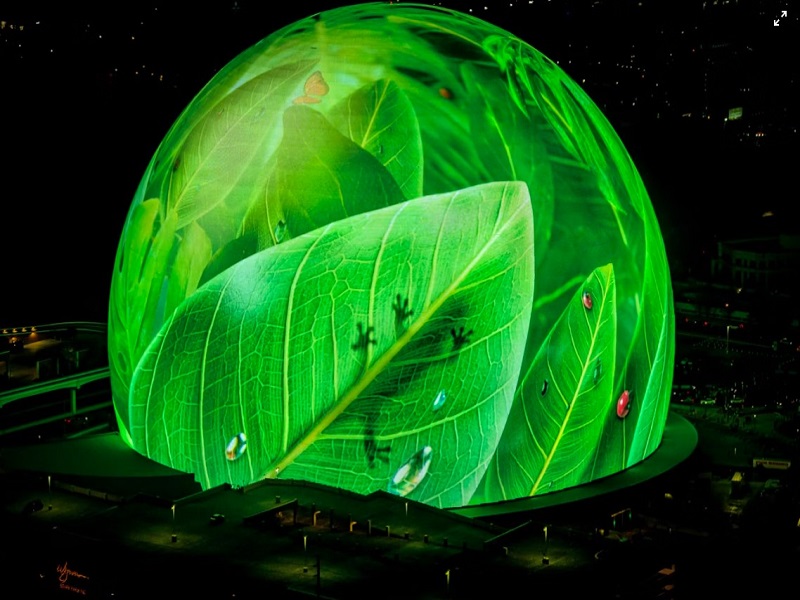
Irregular LED displays — including spherical screens, cylindrical screens, wave-shaped displays, and cube LED screens — also use synchronous and asynchronous control systems. The core concepts remain the same as standard rectangular LED displays:
- Synchronous control displays content from a computer in real time.
- Asynchronous control stores content inside the system and plays it offline without a constant computer connection.
However, irregular LED screens differ from traditional flat displays in several important ways. Because of their unique shapes and structures, they require more advanced control technology and signal processing.
1. Irregular LED Screens Usually Support Both Synchronous and Asynchronous Modes
Traditional rectangular LED screens often use either synchronous or asynchronous control depending on the application. In contrast, most irregular LED displays support both modes simultaneously as a standard feature.
Manufacturers design irregular screens for environments such as:
- Commercial exhibitions
- Stage performances
- Science and technology museums
- Retail experience centers
- Immersive digital art spaces
These applications often require real-time interaction during live events while also needing automatic playback during unattended operation. As a result, dual-mode compatibility provides far greater flexibility than relying on a single control method.
For example, a spherical LED screen may use synchronous control during an interactive presentation but switch to asynchronous playback afterward for continuous advertising loops.
2. Irregular Screens Require Special Video Mapping Processing
A standard rectangular LED screen can directly display a computer image in a 1:1 format. Irregular LED displays cannot do this because their surfaces include curves, cylinders, spheres, or non-standard aspect ratios.
Therefore, the system must process the video signal before displaying it on the screen.
Uniform Pixel Extraction Technology
The processor redistributes image pixels unevenly across the display surface to ensure that images remain visually correct on curved or irregular structures.
Without this processing, the content would appear stretched, compressed, or distorted.
Real-Time Geometric Transformation
Specialized video processors or software reshape the original video signal through:
- Geometric correction
- Cropping
- Stretching
- Warping
- Curved surface mapping
The system then maps the transformed content accurately onto spherical, cylindrical, or wave-shaped LED surfaces.
Customized Content Production
When creating 3D animations or irregular-screen video content, designers must first understand the screen’s:
- Physical shape
- Dimensions
- Pixel resolution
- Curvature
- Module arrangement
Content creators then customize the media specifically for that display structure.
Because of this workflow, synchronous control for irregular LED screens involves much more than simple screen mirroring. The actual signal path becomes:
Computer signal → Video processor → Irregular mapping → LED display
This additional geometric correction stage represents one of the biggest differences between irregular and standard LED screens.
3. Control Cards Must Support Customized Irregular Configurations
Irregular LED displays place much higher demands on control cards than traditional rectangular screens.
Standard LED modules usually follow regular layouts, but irregular screens often use:
- Fan-shaped modules
- Trapezoidal modules
- Curved cabinet structures
- Arc-shaped splicing
Because of these unconventional arrangements, the control system must support highly customized pixel mapping and shape configuration.
If users apply standard rectangular control parameters directly to an irregular display, the screen may experience:
- Image tearing
- Pixel misalignment
- Signal confusion
- Display distortion
Therefore, irregular LED screens require control cards and software specifically designed for non-standard geometries.
Key Differences Between Standard and Irregular LED Screens
| Category | Standard Rectangular LED Screen | Irregular LED Screen |
|---|---|---|
| Control Mode | Usually synchronous or asynchronous | Commonly dual-mode compatible |
| Signal Processing | Direct mapping | Requires geometric correction |
| Video Source | Standard content works directly | Requires custom mapping and deformation |
| Control Card | Standard configuration | Customized irregular configuration |
| Hardware Structure | Sending card + receiving card | Sending card + receiving card + specialized video processor |
Conclusion
Irregular LED screens fully support asynchronous control, and many spherical or cylindrical displays can operate independently with offline playback.
However, when users want to display real-time synchronized video content, they must add a specialized video processor that supports irregular mapping technology. Otherwise, standard video signals will appear heavily distorted on curved or non-standard surfaces.
This advanced geometric processing capability is the fundamental difference between irregular LED display systems and traditional rectangular LED screens.


