How to Design a Special-Shaped LED Screen for Retail Signage?
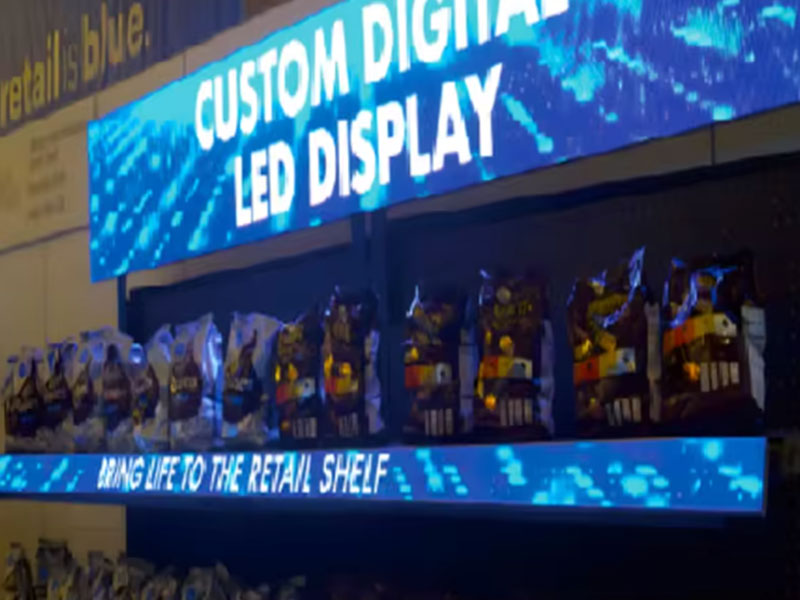
Designing a special-shaped LED screen for retail signage requires balancing visual creativity, structural engineering, and display performance. Unlike standard rectangular displays, special-shaped LED screens must integrate with architectural elements while maintaining pixel consistency and reliability. Below is a structured design approach used in commercial retail display projects.
1. Define the Retail Scenario and Visual Goal
Start by identifying where and how the LED screen will be used. In retail environments, special-shaped screens typically serve one of three purposes:
Brand identity display
- Logo-shaped LED screens
- Letter-shaped displays
- Custom symbolic shapes
Architectural integration
- Curved walls
- Circular columns
- Wave or ribbon structures
Attention-grabbing digital signage
- Suspended ring screens
- Cylindrical LED pillars
- Sculptural LED installations
At this stage determine:
- Viewing distance
- Indoor or outdoor environment
- Ambient lighting conditions
- Content type (video, graphics, logo animation)
These parameters guide pixel pitch selection, brightness, and resolution.
2. Select the Right Pixel Pitch
Pixel pitch directly affects image clarity and cost.
Typical recommendations for retail signage:
| Viewing Distance | Recommended Pixel Pitch |
|---|---|
| 1–3 m | P1.2 – P1.9 |
| 3–6 m | P2 – P2.5 |
| 6–10 m | P3 – P4 |
Retail stores usually require high pixel density because customers stand close to the display.
For example:
- Luxury stores: P1.5–P1.9
- Shopping mall atriums: P2–P3
- Outdoor storefront signage: P3–P5
3. Choose the Appropriate LED Module Type
Special-shaped displays rely heavily on module flexibility and cabinet design.
Flexible LED modules
Best for:
- Curved LED walls
- Circular displays
- Wave structures
Features:
- Bendable PCB
- Magnetic installation
- Smooth curvature
Custom rigid modules
Used for:
- Logo screens
- Polygon structures
- Geometric shapes
Standard modules with custom cutting
Some projects use standard LED modules trimmed into irregular arrangements, reducing cost.
4. Design the Structural Framework
The mechanical structure determines stability and installation feasibility.
Important factors include:
Load-bearing capacity
- Steel or aluminum frame
- Weight distribution across mounting points
Heat dissipation
- Ventilation space behind modules
- Active cooling for enclosed structures
Maintenance access
- Front service (common in retail walls)
- Rear service (when space allows)
Retail signage often requires front-maintenance magnetic modules to simplify servicing.
5. Ensure Content Adaptation for Irregular Shapes
Special-shaped displays require custom content mapping.
Solutions include:
LED video processors with irregular mapping
They allow designers to map content to non-rectangular layouts.
Creative content production
Examples:
- Circular video loops for ring displays
- Logo-shaped animations
- Flowing visuals for wave screens
Retail designers often collaborate with motion graphic teams to ensure visuals match the screen geometry.
6. Optimize Brightness and Color Performance
Retail signage must remain visible under strong indoor lighting or sunlight.
Typical brightness recommendations:
| Environment | Brightness |
|---|---|
| Indoor retail | 800–1200 nits |
| Shopping mall atrium | 1200–2000 nits |
| Outdoor storefront | 4000–6000 nits |
Also consider:
- High refresh rate (≥3840 Hz)
- High grayscale (14–16 bit)
- Wide color gamut
These parameters ensure smooth video playback and vivid branding visuals.
7. Plan Installation and Integration
Finally, integrate the LED screen with store architecture and branding.
Common retail installations:
- LED logo wall behind checkout counters
- Circular LED ceiling displays
- LED columns in shopping malls
- Interactive LED art installations
Proper planning should include:
- Power supply routing
- Control system location
- Safety certification compliance
8. Example Retail Applications
Special-shaped LED screens are widely used in modern retail environments:
Fashion stores
- Curved LED runway walls
Shopping malls
- Suspended circular LED rings
Flagship stores
- Brand logo LED displays
Pop-up stores
- Creative LED sculptures for social media engagement
These installations significantly improve customer engagement and brand memorability.


