How to Ensure High Display Quality for Custom-Shaped LED Screens
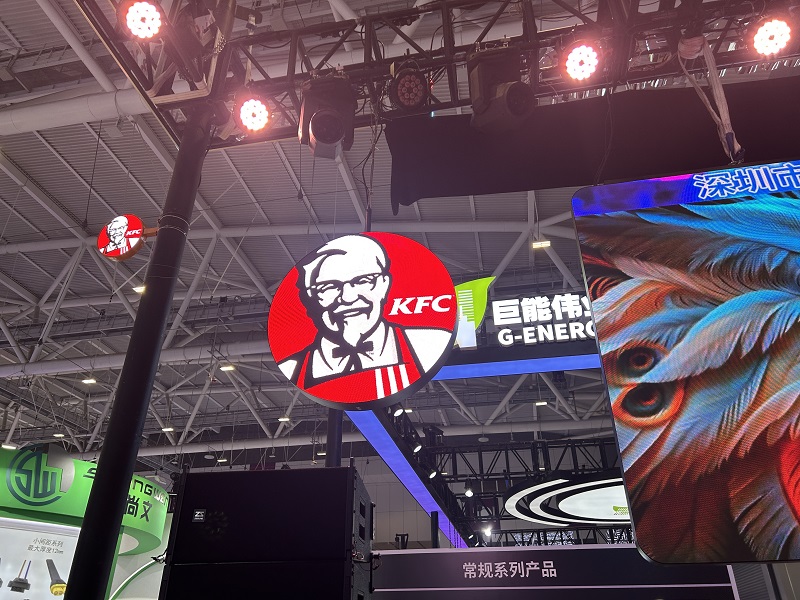
Custom-shaped LED displays create stunning visual experiences, but they also introduce unique technical challenges. Unlike conventional flat LED walls, irregular LED screens must handle complex curves, angles, seams, and viewing perspectives while still delivering uniform brightness, accurate color, and smooth image performance.
To achieve excellent display quality, manufacturers and integrators need to control every stage of the process — from design and material selection to calibration, installation, and long-term maintenance.
This article explains the key technologies and best practices that ensure high-quality performance for custom-shaped LED displays.
1. Start with the Right Design and Component Selection
Display quality begins long before production starts. A well-designed custom LED screen reduces future issues related to color inconsistency, mechanical stress, and signal instability.
Use LEDs from the Same BIN Group
Manufacturers should select LEDs from the same brightness and wavelength BIN. This step minimizes brightness variation and color deviation between pixels.
When LEDs come from mixed batches, the screen often shows visible mura effects, color shifts, or uneven grayscale performance. Consistent LED selection creates a much more uniform image foundation.
Design PCBs for the Actual Shape
Custom-shaped LED displays often include curves, cylinders, waves, spheres, or freeform structures. Therefore, engineers must design flexible PCBs or segmented rigid PCBs according to the screen’s curvature.
A proper PCB structure helps:
- Reduce mechanical stress
- Prevent solder cracking
- Maintain pixel alignment
- Improve long-term reliability
Without shape-specific PCB design, the display may deform over time and create visible image distortion.
Choose High-Refresh Driver ICs
High-quality driver ICs play a critical role in image performance. Modern irregular LED screens should use driver ICs that support:
- High refresh rates
- High grayscale depth
- Low brightness compensation
- Built-in pixel calibration storage
A higher refresh rate reduces flicker and scan lines, especially during camera shooting or live broadcasting.
Optimize Structural Design
Custom LED structures require precise mechanical engineering. Manufacturers typically use modular designs with adjustable connectors so installers can fine-tune alignment during assembly.
At the same time, designers should leave expansion gaps to absorb thermal expansion and contraction. This prevents module deformation and seam stress after long-term operation.
2. Improve Manufacturing Precision
Even the best design cannot guarantee display quality without strict production control.
Increase SMT Placement Accuracy
Irregular LED modules often require customized positioning fixtures during SMT assembly. Accurate placement ensures that every LED sits in the correct position, which directly affects pixel spacing consistency and image sharpness.
Precise SMT processing also improves seam alignment between modules.
Optimize Soldering Quality
Manufacturers should carefully optimize the reflow soldering profile to reduce:
- Cold solder joints
- Virtual soldering
- Component displacement
- Thermal damage
In addition, factories should use AOI (Automated Optical Inspection) and X-Ray inspection systems to detect hidden defects before assembly.
Better soldering quality significantly improves screen stability and reduces dead pixels.
Apply Strong Protective Coatings
Outdoor custom LED displays face rain, humidity, dust, UV exposure, and corrosive environments. Therefore, manufacturers should strengthen conformal coating protection.
Reliable three-proof protection improves:
- Moisture resistance
- Dust resistance
- Corrosion resistance
This becomes even more important for curved or exposed structures where water accumulation may occur.
Perform Long-Term Aging Tests
Aging tests help identify early component failures before shipment. Most professional LED manufacturers run full-load aging tests for 72 hours or longer.
During aging, engineers monitor:
- Brightness consistency
- Temperature performance
- Power stability
- Pixel failure rates
This process removes unstable modules before installation and greatly improves overall reliability.
3. Use Advanced Calibration Technologies
Calibration remains the core technology behind high-quality irregular LED displays.
Without accurate calibration, even premium hardware cannot achieve a uniform visual effect.
Perform Pixel-Level Brightness Calibration
Pixel-level brightness calibration compensates for luminance differences between LEDs.
After calibration, the display achieves:
- Better uniformity
- Reduced mura effect
- Smoother grayscale transitions
- Improved low-brightness performance
High-end custom LED screens often achieve brightness uniformity above 95%.
Apply Pixel-Level Color Calibration
Color calibration aligns the chromaticity coordinates of each LED pixel.
This process eliminates:
- Batch color differences
- Red/green/blue imbalance
- Local color deviation
As a result, the entire display shows more accurate and natural colors.
Conduct On-Site Secondary Calibration
Transportation, installation stress, and environmental conditions can slightly change screen performance after factory calibration.
Therefore, professional integrators perform secondary calibration on-site after installation.
This step compensates for:
- Structural deformation
- Ambient lighting conditions
- Viewing-angle changes
- Module installation tolerance
Secondary calibration significantly improves final image consistency.
Use Algorithms Designed for Irregular Displays
Custom-shaped LED screens require specialized image processing algorithms.
Advanced systems typically include:
- Surface normal compensation
- Seam smoothing algorithms
- Multi-viewpoint optimization
- Curved image mapping
These technologies help maintain visual consistency across complex geometries and wide viewing angles.
4. Ensure Precise Installation and Debugging
Installation quality directly affects final display performance.
Even a perfectly calibrated screen can show visible defects if the installation lacks precision.
Control Mechanical Alignment
Installers should use laser positioning tools to ensure:
- Consistent module gaps
- Smooth curvature transitions
- Accurate geometric alignment
Poor alignment often creates visible seams, brightness discontinuities, and distorted images.
Balance Power Distribution
Custom-shaped LED displays usually have more complicated cable routing than flat screens. Long power lines can cause voltage drops and uneven brightness.
To solve this problem, engineers should:
- Calculate voltage drop carefully
- Use distributed power supply architecture
- Divide the screen into balanced power zones
Stable power improves brightness consistency and system reliability.
Protect Signal Integrity
Complex LED topologies may weaken data transmission quality.
Therefore, integrators often add:
- Signal repeaters
- Fiber transmission systems
- Shielded communication cables
These measures reduce signal attenuation and electromagnetic interference.
Verify Thermal Performance
Heat management strongly affects LED lifespan and color stability.
Engineers commonly use infrared thermal imaging cameras to identify hotspots after installation.
If necessary, they add:
- Ventilation systems
- Heat dissipation structures
- Auxiliary cooling devices
Better thermal control maintains long-term display consistency.
5. Build a Long-Term Maintenance Strategy
Display quality does not remain constant forever. LEDs gradually experience brightness decay and color drift over time.
Regular maintenance keeps the screen operating at peak performance.
Implement Real-Time Monitoring
Modern LED control systems can monitor:
- Temperature
- Brightness
- Power status
- Dead pixels
- Communication faults
Automatic alerts help maintenance teams respond before minor issues become major failures.
Recalibrate Periodically
Most professional operators recalibrate LED screens every 6 to 12 months.
Periodic recalibration compensates for:
- LED aging
- Brightness decay
- Color drift
- Environmental changes
This process extends the visual consistency lifecycle of the display.
Maintain Module Calibration Records
Each LED module should have an independent calibration profile.
When technicians replace a module, they can quickly match calibration data and reduce visible replacement differences.
This approach shortens maintenance time and improves repair quality.
Clean the Screen Regularly
Dust and dirt can create visible shadows and brightness inconsistency, especially on curved surfaces.
Routine cleaning helps maintain:
- Image clarity
- Brightness uniformity
- Heat dissipation efficiency
For outdoor installations, regular maintenance becomes even more critical.
Conclusion
High-quality custom-shaped LED displays require much more than creative design. Manufacturers and integrators must carefully manage every stage of the process, including component selection, manufacturing precision, pixel-level calibration, installation accuracy, and long-term maintenance.
When companies combine advanced calibration technology with precise engineering and proactive maintenance, custom LED screens can deliver exceptional brightness uniformity, accurate color reproduction, smooth curved visuals, and long-term reliability.
As immersive digital displays continue to evolve, display quality will remain the key factor that separates premium custom LED projects from ordinary installations.


