LED Display Control Solutions for Standard and Creative LED Screens
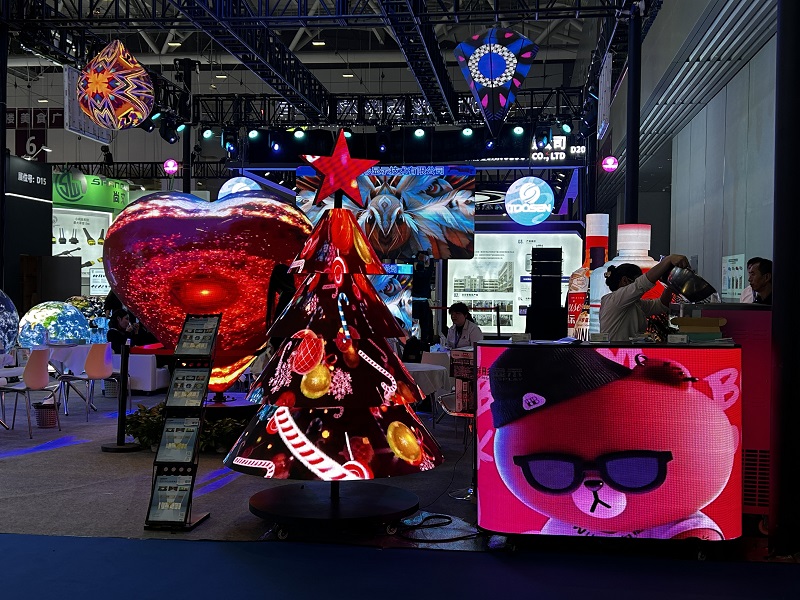
LED display control solutions can generally be divided into five major control architectures. Whether the project uses a standard flat LED screen or a creative display such as a curved screen, spherical LED screen, cylindrical display, wave-shaped installation, or immersive CAVE environment, the core control logic remains largely the same.
However, creative LED displays introduce additional challenges in pixel mapping, calibration, content production, and on-site system integration.
1. Five Main LED Display Control Architectures
1. Synchronous Control System
Key Features
- Real-time signal synchronization
- Ultra-low latency
- High refresh rate and high grayscale performance
- Ideal for dynamic video content and live broadcasting
Typical Applications
- Stage performances
- TV studios
- High-end conference rooms
- Sports broadcasting
- XR virtual production
Creative LED Screen Considerations
Synchronous systems are the mainstream choice for creative LED displays. The control platform must support:
- Arbitrary cabinet routing
- Non-standard module layouts
- Non-planar pixel mapping
- 3D coordinate mapping
These functions convert the physical 3D structure into a logical display surface and prevent image stretching or distortion.
Common Solutions
- Novastar MCTRL Series
- Colorlight Z Series
- Brompton Tessera (high-end rental applications)
2. Asynchronous Control System
Key Features
- Standalone playback without a dedicated PC
- Scheduled playback and automatic power control
- Loop content playback
- Lower system cost
Typical Applications
- Outdoor advertising screens
- Traffic guidance displays
- Retail signage
- Information boards
Creative LED Screen Considerations
Asynchronous systems are less common in complex creative installations. They are mainly used for:
- Curved storefront signage
- Cylindrical information displays
- Simple creative advertising structures
The controller software must still support irregular module routing and basic creative screen configuration.
Common Solutions
- Novastar Taurus Series
- HDPlayer
- Huidu Control Systems
3. Distributed / IP-Based Control System
Key Features
- Network-based signal transmission
- Long-distance deployment
- Multi-screen centralized management
- Multi-window roaming and signal switching
Typical Applications
- Command centers
- Monitoring centers
- Large conference facilities
- Commercial complexes
Creative LED Screen Considerations
Distributed systems are often the preferred solution for:
- Immersive spaces
- Multi-surface installations
- Large irregular LED facades
- Complex architectural LED projects
Node-based receiving card deployment allows flexible adaptation to different cabinet angles and unconventional structures.
Common Solutions
- Novastar H Series
- Colorlight Z6 Pro
4. Cloud Control & IoT Solutions
Key Features
- Remote centralized management
- Multi-screen networking
- Real-time monitoring
- API integration and data visualization
Typical Applications
- Chain retail stores
- Smart city pole screens
- Community information displays
- Digital signage networks
Creative LED Screen Considerations
Cloud-based systems are ideal for:
- Creative lamp-post displays
- Landscape LED installations
- Spherical landmark screens
- Remote content management applications
These projects often require remote diagnostics, cloud scheduling, and online status monitoring.
Common Solutions
- Nova Cloud
- Colorlight Cloud Platform
5. Entry-Level / Single-Color Control Solutions
Key Features
- Low cost
- Simple functionality
- Text and basic graphic display
Typical Applications
- Scrolling text signs
- Bus destination displays
- Price boards
- Storefront message displays
Creative LED Screen Considerations
Used mainly for:
- Curved ticker displays
- Ring-shaped text screens
- Simple irregular signage
The controller must support basic custom routing for non-standard layouts.
2. Four Major Technical Challenges in Creative LED Displays
| Challenge | Description |
|---|---|
| Irregular Configuration & Pixel Mapping | Creative screens use rotated, curved, or staggered module arrangements. The control system must support arbitrary routing and 3D pixel mapping to correctly align physical and logical pixels. |
| Brightness & Color Calibration | Curved viewing angles create visible brightness and color inconsistencies. Advanced point-by-point calibration and 3D LUT correction are often required. |
| Content Creation & Media Playback | Standard video cannot directly drive spherical, immersive, or XR displays. Media servers such as disguise, d3, Resolume, hecoos, and Unreal Engine nDisplay are used for 3D pixel mapping and pre-visualization. |
| Cabinet Structure & Receiving Card Deployment | Flexible modules, 45° cabinets, and polygonal structures create complex signal-routing paths. Multi-card cascading and non-standard cable layouts significantly increase commissioning complexity. |
3. Recommended Control Architectures by Application
| Application Scenario | Recommended Architecture | Additional Considerations for Creative Displays |
|---|---|---|
| Stage Performance / Live Broadcast | Synchronous System | Must support irregular pixel mapping and integrate with media servers |
| Command & Monitoring Centers | Distributed System | Node-based deployment for curved and multi-surface walls |
| Outdoor Advertising / Smart Poles | Asynchronous or Cloud Control | Remote calibration and creative layout support required |
| Retail Chains / New Retail | Cloud Control | Cloud-based creative templates for curved storefront displays |
| Conference Rooms / Fine-Pitch Displays | Synchronous System | Low brightness with high grayscale and non-planar correction |
| Immersive CAVE / XR Studios | Distributed + Synchronous | Requires Unreal Engine, disguise, or hecoos for 3D mapping |
| Spherical Screens / LED Domes / Floor Displays | Synchronous System | Professional media servers and spherical mapping are essential |
| Simple Signage / Scrolling Text Displays | Entry-Level Asynchronous | Controller must support basic irregular routing |
4. Conclusion
The core logic behind LED display control system selection remains the same for both standard and creative LED screens. The application scenario determines whether the project requires a synchronous, asynchronous, distributed, or cloud-based control architecture.
However, creative LED displays add another layer of complexity. Beyond the primary control architecture, the system must also support:
- Creative screen configuration
- Non-planar pixel mapping
- Arbitrary routing
- Advanced calibration
- 3D content processing
In many high-end projects, professional media servers and precise point-by-point calibration become essential to eliminate image distortion and achieve the intended visual effect.


