Outdoor LED Display Brightness by Region
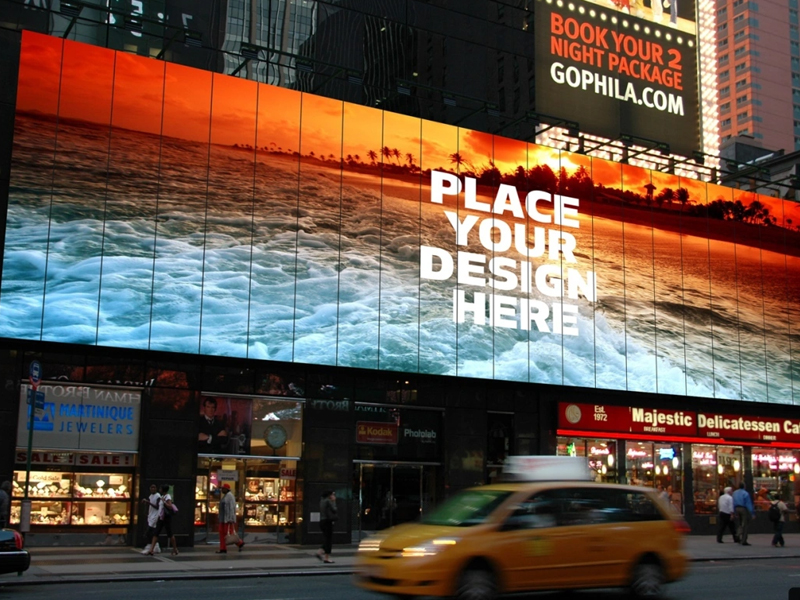
When you design an outdoor LED display, ambient sunlight—not just screen specs—defines visibility. The stronger the solar radiation in a region, the higher the brightness (nits) your LED screen must deliver to remain readable in daylight.
This guide translates global solar intensity zones into practical LED brightness requirements, so you can specify the right display for any market.
Why Solar Intensity Matters
Direct sunlight can reach 90,000–130,000 lux at noon in extreme environments. Under these conditions, a low-brightness LED screen will wash out completely.
Therefore, you should always match screen brightness to local irradiance levels, not just rely on generic specifications.
1. Global Solar Radiation Zones
Engineers typically classify regions based on annual solar radiation and average irradiance. Each zone creates different visibility challenges.
1.1 Extreme Radiation Zones
(Deserts, high plateaus, equatorial arid regions)
- Annual radiation: ≥ 7000 MJ/m²
- Average irradiance: ≥ 220 W/m²
- Noon illuminance: 90,000–130,000 lux
Typical regions:
- Sahara Desert
- Arabian Desert
- Atacama Desert
- Central Australia
- Tibetan Plateau
These environments produce the harshest viewing conditions due to intense, direct sunlight and minimal atmospheric diffusion.
1.2 High Radiation Zones
(Arid, semi-arid, tropical savanna climates)
- Annual radiation: 5800–7000 MJ/m²
- Irradiance: 180–220 W/m²
- Noon illuminance: 75,000–95,000 lux
Typical regions:
- Southwestern United States (Arizona, New Mexico)
- Northern Mexico
- South African plateau
- Northwest India
- Inland Australia
1.3 Medium-High Radiation Zones
(Temperate continental, Mediterranean, monsoon climates)
- Annual radiation: 4600–5800 MJ/m²
- Irradiance: 140–180 W/m²
- Noon illuminance: 65,000–80,000 lux
Typical regions:
- Eastern and Central United States
- Southern Europe (Spain, Italy, Greece)
- Japan and South Korea
- Northern and Eastern China
- Brazil plateau
1.4 Medium Radiation Zones
(Oceanic and humid subtropical climates)
- Annual radiation: 3400–4600 MJ/m²
- Irradiance: 100–140 W/m²
- Noon illuminance: 55,000–70,000 lux
Typical regions:
- Western and Central Europe (France, Germany, UK)
- Southern China
- Northwestern United States
- New Zealand
1.5 Low Radiation Zones
(High latitude, rainy, or basin regions)
- Annual radiation: < 3400 MJ/m²
- Irradiance: < 100 W/m²
- Noon illuminance: 45,000–60,000 lux
Typical regions:
- Northern Europe (Norway, Sweden, Finland)
- Northern Canada
- Parts of Russia
- Rainforest and mountainous regions
2. Recommended LED Brightness by Region
To maintain clear visibility, you should scale LED brightness according to these zones:
| Radiation Zone | Base Brightness | High Exposure (Direct Sunlight) | Key Notes |
|---|---|---|---|
| Extreme | ≥ 9000 nits | 12,000–16,000 nits | Strong direct sunlight, minimal shading |
| High | ≥ 8000 nits | 9000–13,000 nits | Frequent clear skies, intense midday light |
| Medium-High | ≥ 7000 nits | 7000–9000 nits | Seasonal strong sunlight |
| Medium | ≥ 6000 nits | 6000–7500 nits | Cloud cover reduces intensity |
| Low | ≥ 5000 nits | 5000–6500 nits | Lower sunlight, but still outdoor-grade |
As a rule, brightness must increase with irradiance to maintain contrast ratio and readability.
3. Practical Engineering Rules
Beyond regional classification, several real-world factors affect brightness requirements.
3.1 Minimum Global Standard
- All outdoor full-color LED displays should meet:
- ≥ 5000 nits (absolute minimum)
3.2 Orientation and Exposure
- If the screen faces direct sunlight with no shading:
- Increase brightness by 20–30%
3.3 High-Reflection Environments
Certain locations amplify light through reflection:
- Coastal areas
- Salt flats
- Snow-covered regions
In these cases, treat the project as a high-exposure scenario, even if the region itself is moderate.
3.4 Automatic Brightness Control (Critical)
Every modern outdoor LED display should include:
- Auto-brightness sensors
- Daytime: high brightness output
- Nighttime: reduce to 500–1000 nits
This approach:
- Saves energy
- Extends LED lifespan
- Prevents light pollution
3.5 Special Environments
High Altitude
- Stronger UV and solar radiation
- Require higher brightness + enhanced cooling
Polar or Cold Regions
- Lower sunlight but extreme temperatures
- Require:
- Cold-resistant components
- Wind-resistant structural design
4. Key Takeaways
To specify the correct LED display brightness, always:
- Analyze local solar radiation data
- Adjust for installation angle and exposure
- Consider environmental reflections
- Implement dynamic brightness control
Conclusion
Outdoor LED display performance depends heavily on environmental light conditions. By aligning brightness specifications with regional solar intensity, you ensure:
- Clear daytime visibility
- Energy-efficient operation
- Long-term system reliability
In short, the brighter the environment, the brighter your screen must be—but always with intelligent control.


