The Future Development of Flexible LED Display Technology
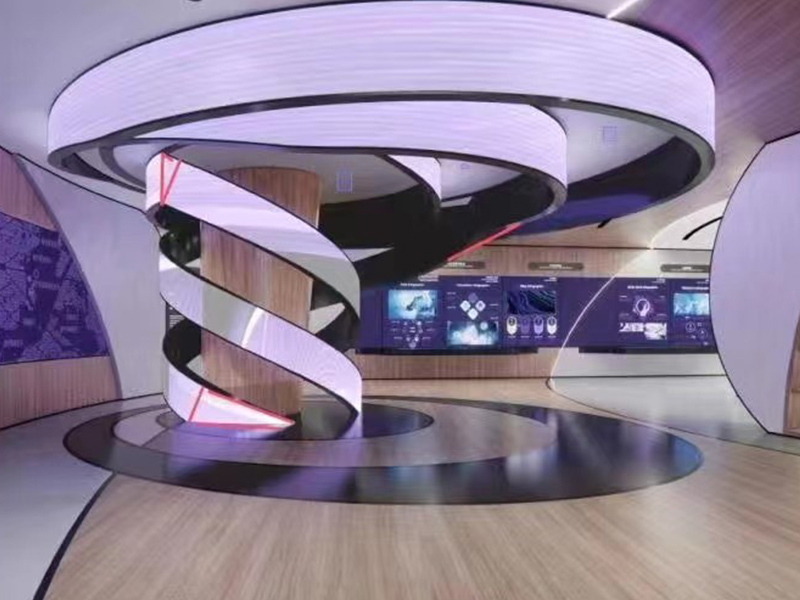
Flexible display technology has become a key battleground for manufacturers looking to strengthen their competitive edge. As the next wave of technological upgrades accelerates, companies that move early will gain significant market share.
At the same time, demand for flexible LED displays continues to grow. This is not a short-term trend—it reflects a structural shift in how people expect displays to function and integrate into everyday environments.
Why Flexible Display Technology Must Evolve
Compared to traditional display solutions, the market now demands higher resolution, better cost performance, and more versatile form factors.
Advancements in panel technology have already driven upgrades across the display industry, creating a more integrated and collaborative ecosystem. Within this landscape, flexible display technology stands out as a core competitive advantage.
Its strengths are clear:
- Ultra-thin form factor
- Bendable and foldable structure
- Adaptability to unconventional shapes
These capabilities enable entirely new product categories, including foldable, curved, and rollable devices. For example, today’s foldable smartphones are built on flexible display platforms that combine advanced panel design with complex manufacturing processes.
However, current solutions still fall short of true flexibility. Most foldable displays cannot bend as freely as paper, which highlights the need for further material and structural innovation.
The Shift Toward New Materials
To unlock the full potential of flexible displays, the industry is actively exploring next-generation conductive materials.
Why Not Traditional ITO?
Indium Tin Oxide (ITO), widely used in conventional displays, has critical limitations:
- High rigidity
- Brittleness under repeated bending
- Poor long-term flexibility
Because of these constraints, ITO cannot meet the evolving demands of flexible applications.
Promising Alternatives: Graphene and Silver Nanowires
Two materials are gaining significant attention as replacements:
Graphene
- High transparency
- Excellent flexibility and bend resistance
- Superior electrical and thermal conductivity
Silver Nanowires
- Low electrical resistance
- Strong mechanical flexibility
- Low haze, suitable for high-clarity displays
Equally important, both materials offer scalable production potential and lower long-term costs, making them viable for mass adoption.
Future Technology Directions
As materials and processes improve, flexible LED displays will evolve in several key directions:
- Higher flexibility and durability
Displays will move closer to paper-like bending, enabling more extreme form factors. - Integration with architecture and space design
Flexible LED will increasingly merge with buildings, interiors, and urban environments. - Lightweight and ultra-thin structures
Reducing weight and thickness will simplify installation and expand application scenarios. - Smarter and interactive systems
Integration with sensors, AI, and IoT will enable real-time interaction and adaptive content. - Lower production cost
Material innovation and manufacturing scale will drive wider adoption.
Market Outlook
As the technology matures, more flexible and foldable products will enter the market—not just in consumer electronics, but also in commercial displays, retail, cultural tourism, and architectural media.
Flexible display technology is no longer a niche innovation. It is becoming a foundational component of the next-generation display ecosystem.
Conclusion
The future of flexible LED displays depends on the convergence of three factors:
- Material innovation (e.g., graphene, silver nanowires)
- Structural engineering (true flexibility without failure)
- Application expansion (from devices to spatial media)
As these elements align, flexible displays will move beyond screens and become a core medium for digital environments, reshaping how people experience visual information.


