The Real Technology Behind Cylindrical LED Displays
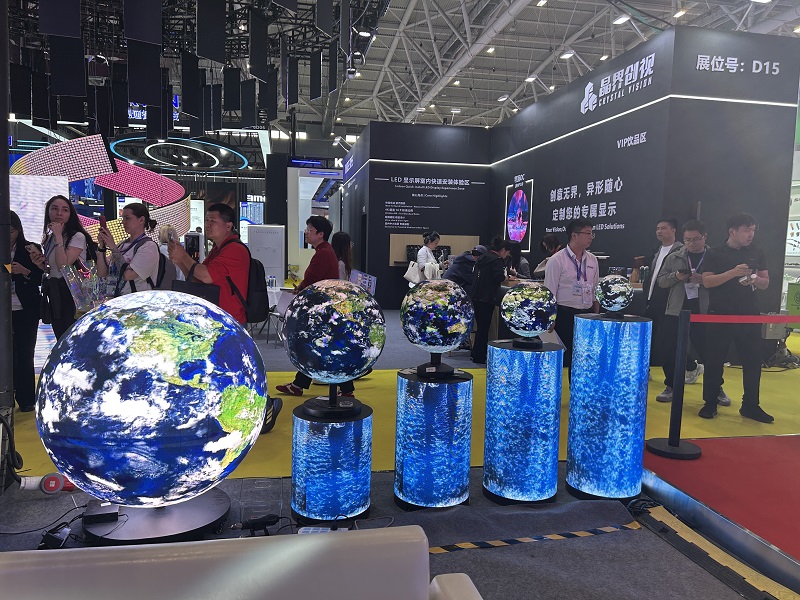
Cylindrical LED displays use non-standard resolutions.
Another important clue from the comment is the likelihood of a custom screen resolution.
Unlike standard 16:9 displays, cylindrical LED screens often use unusual pixel dimensions such as:
- 768 × 1536
- 1024 × 2048
- Custom panoramic layouts
The control system must therefore:
- Redistribute signal loads
- Assign data ports correctly
- Synchronize module positions
- Maintain image continuity
Otherwise, the display will show tearing, mismatched seams, or warped graphics.
Advanced Projects Go Beyond Simple Mapping
Basic cylindrical LED screens rely mostly on sending card configuration. However, high-end immersive projects often integrate additional technologies.
These systems may include:
- Real-time rendering engines
- 3D content servers
- Interactive media systems
- Motion tracking
- Unreal Engine workflows
- Notch rendering pipelines
Large installations frequently combine hardware mapping with custom 3D content production for a more immersive visual effect.
Why the Original Answer Was Oversimplified
The comment “Just adjust sending card’s control system” is technically correct, but it simplifies a much more complex workflow.
Professional cylindrical LED projects still require:
- Mechanical engineering
- Structural alignment
- Signal distribution
- Calibration
- Color correction
- Pixel mapping
- Content adaptation
In other words, the sending card is essential, but it is only one part of the complete system.
Conclusions
Can-shaped LED screens work because engineers combine physical LED structures with intelligent control system mapping.
Instead of treating the screen like a normal rectangle, the LED processor remaps pixel coordinates to fit a cylindrical surface. Consequently, videos appear smooth, continuous, and visually accurate around the entire display.
So when someone says:
“Just adjust sending card’s control system.”
What they really mean is:
The cylindrical LED effect comes from custom pixel mapping, control software configuration, and irregular display management inside the LED control system.
That process may look simple from the outside, but it is actually one of the most important technologies behind modern creative LED displays.


