What Affects the Color Temperature of a Creative LED Display?
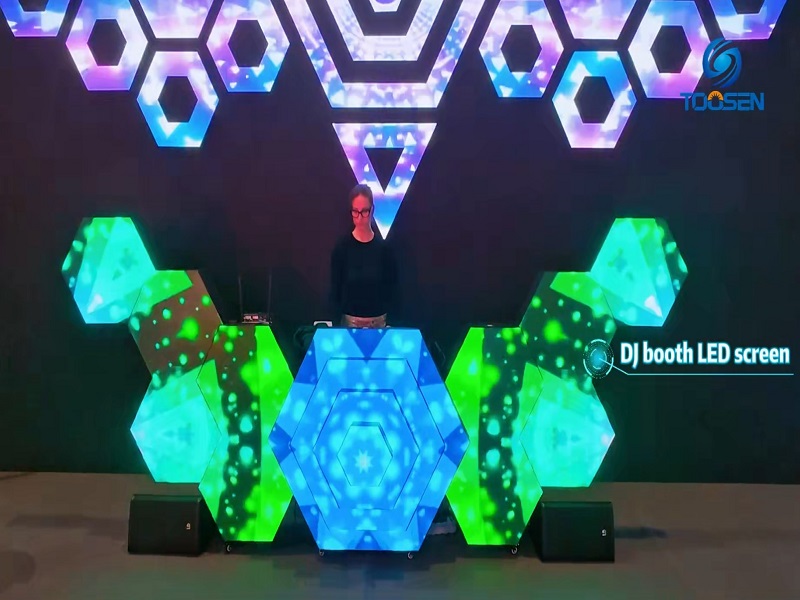
The color temperature of a creative LED display does not depend on a single factor. Instead, multiple variables influence how the screen produces and maintains white balance and color consistency over time.
In most cases, the main influencing factors fall into four categories:
- Hardware-related factors
- Environmental factors
- Operating conditions
- System and software adjustments
Creative LED displays also face several unique challenges because of their curved, irregular, or flexible structures.
1. Hardware Factors
The hardware itself plays the biggest role in determining the initial color temperature and long-term consistency of a creative LED screen.
LED Chip Batch Differences
Even when manufacturers use the same LED model, different production batches may contain different color temperature bins.
If installers mix modules from different batches, the screen may show visible color temperature inconsistencies across different areas.
This issue remains one of the most common causes of uneven white balance in creative LED displays.
RGB Chip Ratio
The brightness ratio between the red, green, and blue chips directly determines the final white color produced by the screen.
If one color channel shifts slightly, the overall color temperature changes immediately.
For example:
- Stronger blue output creates a cooler white tone
- Stronger red output creates a warmer white tone
Therefore, precise RGB calibration is essential for color consistency.
Phosphor and Packaging Materials
White LEDs rely heavily on phosphor coatings and encapsulation materials.
Differences in:
- Phosphor composition
- Packaging glue refractive index
- Optical coating quality
can all affect the screen’s original color temperature performance.
Driver IC Accuracy
The LED driver IC controls the electrical current delivered to each LED.
If different driver ICs output slightly different current levels, some screen areas may appear brighter or cooler than others.
As a result, driver precision directly affects color temperature uniformity.
Mixed Module Production Batches
When projects combine LED modules from multiple production batches, color inconsistency becomes much more noticeable.
This problem becomes even more visible on curved and irregular LED surfaces because the human eye detects brightness and color variations more easily on non-flat structures.
2. Environmental Factors
External environmental conditions also affect color temperature performance.
Ambient Temperature
LED chips are highly sensitive to temperature.
As temperature rises:
- Blue LEDs usually lose efficiency faster
- The overall white balance shifts toward warmer tones
In other words, high temperatures often reduce the color temperature value.
Heat Dissipation Conditions
Creative LED displays such as cylindrical, spherical, or wave-shaped screens usually have more complicated internal structures.
Because of this, some areas may dissipate heat poorly.
Uneven heat distribution can cause localized color temperature shifts across the display surface.
Ambient Light Interference
Strong surrounding light sources, including:
- Sunlight
- Stage lighting
- Spotlights
can affect how viewers perceive the screen’s color temperature.
Although ambient light does not change the actual screen output, it significantly changes visual perception.
Humidity and Dust
Long-term exposure to humidity or dust may alter the optical characteristics of LED surfaces.
Over time, this contamination can indirectly affect color temperature consistency.
3. Operating Condition Factors
The operating condition of the display also influences color temperature stability.
LED Aging and Brightness Decay
As LEDs age, the red, green, and blue chips do not degrade at the same speed.
Typically, blue LEDs decay faster than red LEDs.
As a result, the screen gradually shifts toward warmer tones over time.
This phenomenon explains why older LED screens often appear yellower than new installations.
Working Current and Brightness
Higher operating current increases LED junction temperature.
Consequently, stronger brightness settings usually cause more noticeable color temperature drift.
In some cases, the same display may show slightly different color temperatures under low-brightness and high-brightness modes.
Power Supply Stability
Voltage fluctuations can destabilize the LED driving current.
This instability may cause:
- Color temperature flickering
- Temporary color shifts
- Uneven white balance
Therefore, stable power systems are essential for professional LED installations.
Continuous Operating Time
Long periods of continuous operation increase internal screen temperature.
As heat accumulates, the color temperature slowly drifts.
After the screen cools down, part of the color shift may recover naturally.
4. System and Software Adjustment Factors
Modern LED control systems provide extensive color management functions.
Proper system calibration greatly improves color temperature consistency.
Control System Color Temperature Settings
The control system directly adjusts the gain values of the RGBW channels.
Professional systems allow technicians to fine-tune:
- Red intensity
- Green intensity
- Blue intensity
- White balance
As a result, operators can precisely customize the screen’s color temperature according to different application scenarios.
Pixel-by-Pixel Calibration
Without pixel-level calibration, individual LEDs may show obvious color differences.
Professional point-by-point chromaticity calibration dramatically improves screen uniformity by correcting every pixel independently.
This technology becomes especially important for fine-pitch and creative LED displays.
Gamma and Color Gamut Settings
Improper Gamma curves or color gamut configurations can alter white balance performance.
Even if the hardware remains unchanged, incorrect software settings may create visible color temperature shifts.
Signal Transmission Loss
Creative LED displays often use complicated internal wiring structures.
Long-distance signal transmission may cause signal attenuation, especially in large irregular displays.
As a result, modules located farther from the controller may show slightly different brightness and color temperature performance.
Refresh Rate Settings
Low refresh rates may create visible color shifts during camera recording or smartphone photography.
However, this effect usually comes from scanning artifacts or moiré patterns rather than true color temperature changes.
5. Unique Factors Specific to Creative LED Displays
Creative LED screens introduce several additional challenges that traditional flat LED displays do not face.
Curved and Arc-Shaped Structures
LEDs emit light differently at various viewing angles.
On curved displays, viewers may perceive different color temperatures depending on their viewing position.
Splicing Gaps
Irregular LED assemblies often include complex seams and connection points.
These gaps can slightly alter the local optical environment and affect adjacent color consistency.
Flexible Module Stretching
Flexible LED modules bend during installation.
This bending slightly changes:
- LED spacing
- Optical pathways
- Surface geometry
As a result, localized color temperature variations may appear.
Uneven Heat Distribution
Spherical, cylindrical, and irregular displays expose different surfaces to different environmental conditions.
Some areas receive more sunlight or airflow than others, creating uneven temperature distribution across the display.
Consequently, different sections of the screen may show different color temperatures.
Recommendations for Improving Color Temperature Consistency
Manufacturers and installers can significantly improve color consistency by following several best practices.
Purchase Modules from the Same Batch
Using modules from the same production batch minimizes initial color temperature differences.
Perform Pixel-Level Calibration
Professional point-by-point calibration equipment helps eliminate pixel-level color inconsistencies across the entire screen.
Use Intelligent Temperature Compensation
Advanced control systems can automatically adjust color temperature according to real-time screen temperature.
This function helps maintain stable white balance during long operating periods.
Optimize Heat Dissipation Design
Creative LED structures require careful airflow and thermal management planning.
Proper ventilation reduces localized overheating and improves color consistency.
Recalibrate Regularly
After approximately six months of operation, technicians should recalibrate:
- White balance
- Brightness
- Color temperature
Regular recalibration compensates for LED aging and brightness decay.
Conclusion
The color temperature of a creative LED display depends on a complex combination of hardware quality, environmental conditions, operating status, and software calibration.
Compared with traditional flat LED screens, creative LED displays face additional challenges because of their irregular shapes, flexible structures, and complicated thermal conditions.
To maintain stable color performance, manufacturers must combine:
- High-quality LED components
- Precise driver systems
- Advanced calibration technology
- Intelligent thermal management
- Professional installation practices
When all these factors work together properly, creative LED displays can achieve excellent color consistency and immersive visual performance even in highly complex installations.


