What Determines the Price of a Spherical LED Screen?
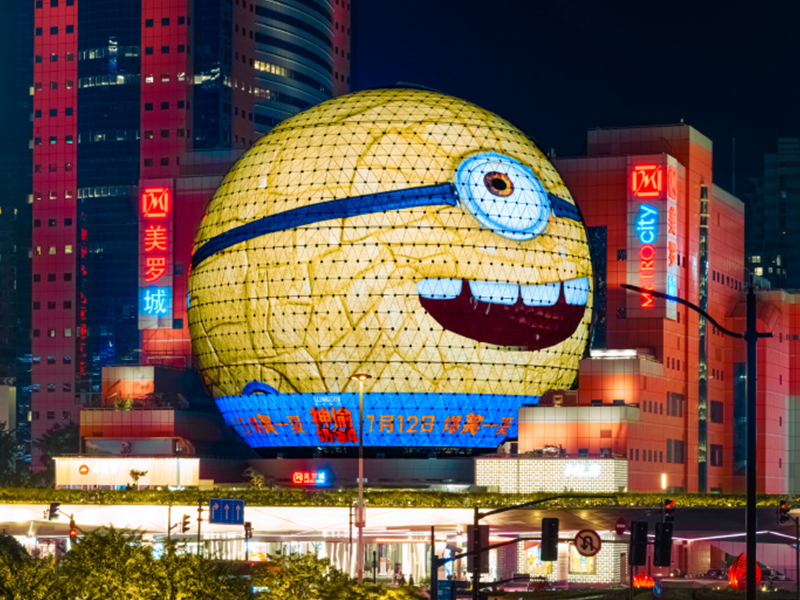
Spherical LED screens stand out as premium, highly customized display solutions. However, their pricing can vary significantly from project to project. In most cases, seven core factors drive the final cost: size, pixel pitch, configuration, structural design, customization level, installation environment, and brand/service support.
Let’s examine each factor in detail so you can better estimate your investment.
1. Size and Shape: The Primary Cost Driver
First, diameter directly impacts both unit price and total cost. As the sphere gets larger, manufacturers must use more LED modules, stronger structures, and more complex assembly processes.
At the same time, non-standard shapes introduce additional costs:
- Hemispheres, ellipsoids, and irregular spheres typically carry a 30%–100% premium
- Custom molds and specialized fabrication processes increase both material and labor expenses
In short, the larger and more customized the shape, the higher the price.
2. Pixel Pitch: Resolution vs. Cost
Pixel pitch defines the distance between pixels and directly determines display clarity.
- P4–P10 (standard outdoor / long viewing distance): baseline pricing
- P2.5–P3 (indoor HD): typically 40%–60% higher
- P1.25–P2 (fine pitch / close viewing): can double the cost or more
As pixel pitch decreases, pixel density increases sharply. Consequently, manufacturing complexity rises, and costs escalate.
3. LED Chips and Component Quality
Component selection plays a critical role in both performance and longevity.
- Premium LED brands (such as Nationstar, Kinglight, Nichia) usually add 15%–25% to the cost
- Gold wire packaging offers better durability than copper wire, but at a higher price
- Higher specifications—such as greater grayscale levels, higher refresh rates, and brightness above 5000 cd/m² for outdoor use—also push costs upward
In practice, better components reduce failure rates and improve visual performance, making them a worthwhile long-term investment.
4. Structural Design and Support System (15%–25%)
Unlike flat LED displays, spherical screens require complex mechanical engineering.
- Internal steel frameworks must support weight and ensure uniform load distribution
- Larger spheres demand precise structural calculations for wind resistance and seismic stability
- Installation types—such as suspended, floor-mounted, rotating, or lifting systems—add further complexity
- Multi-faceted or irregular spherical designs increase mold and fabrication costs
Therefore, the more advanced the structure, the higher the engineering and production expenses.
5. Customization Level
Spherical LED screens are rarely off-the-shelf products. Most projects involve some level of customization, including:
- Unique shapes or segmented designs
- Special surface treatments
- Interactive or motion-based features
As customization increases, so do design time, prototyping costs, and production complexity.
6. Installation, Transportation, and Logistics
Beyond manufacturing, on-site factors significantly affect the final budget.
- Installation height and rigging difficulty influence labor and equipment costs
- Transportation fees vary based on size, weight, and distance
- Remote locations or high-altitude installations often incur additional charges
These logistical considerations can account for a substantial portion of the total project cost.
7. Brand, Warranty, and Service
Finally, the supplier you choose matters.
- Established manufacturers with proven experience may charge more, but they typically deliver better reliability
- Warranty periods (usually 1–3 years) and after-sales service also factor into pricing
- Technical support, spare parts availability, and maintenance services add long-term value
Conclusion
Spherical LED screen pricing is not fixed—it depends on a combination of technical specifications, structural complexity, and project conditions.
As a general rule:
- Larger size + smaller pixel pitch = higher cost
- More customization + complex structure = higher premium
Therefore, when planning a project, you should clearly define your application scenario, viewing distance, and budget. This approach helps you strike the right balance between performance and cost while ensuring a successful installation.


