Why Immersive LED Screens Feel So Powerful
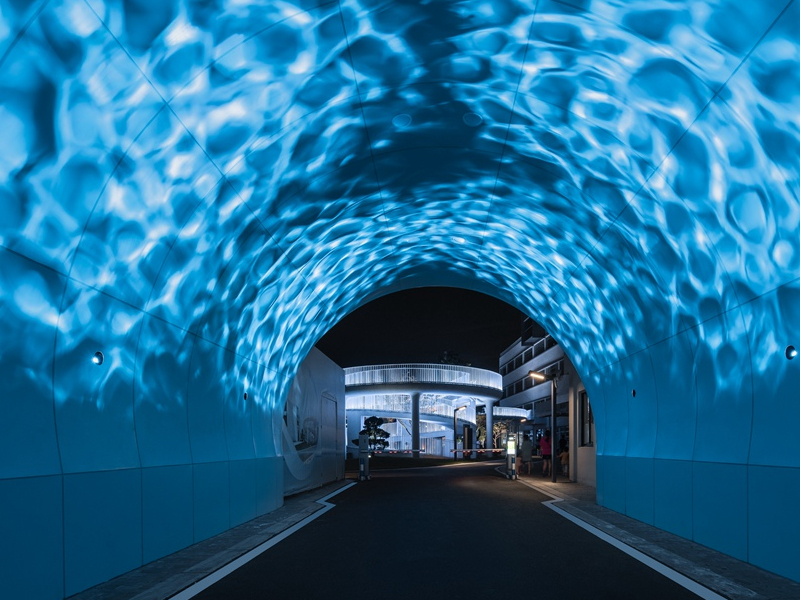
Walk into a fully immersive LED space and you immediately feel it—scale, motion, and light wrap around you. Unlike traditional displays, these environments don’t just show content; they pull you inside it. So what actually makes immersive LED screens so powerful?
Let’s break it down from a technical, perceptual, and experiential standpoint.
1. Full Field of View: You’re No Longer Just “Watching”
Traditional LED screens sit in front of you. You look at them.
Immersive LED environments change that dynamic entirely. They expand across:
- Walls
- Ceilings
- Floors
- Curved or enclosed structures
As a result, they occupy a much larger portion of your field of view (FOV).
Why this matters:
The human brain prioritizes peripheral vision for spatial awareness. When content extends into your peripheral vision:
- You stop focusing on a “frame”
- You start perceiving a surrounding environment
In other words, the screen disappears—and the illusion takes over.
2. Scale Triggers an Instinctive Emotional Response
Size alone has a profound psychological effect.
Massive LED installations—especially dome or wraparound structures—tap into something primal: humans instinctively react to objects larger than themselves.
This creates:
- A sense of awe
- A feeling of immersion
- Sometimes even slight disorientation
That’s why giant immersive displays often go viral. They don’t just look impressive—they feel overwhelming in a controlled, intentional way.
3. Motion + Light = Sensory Dominance
Immersive LED screens combine:
- High brightness
- Rich color depth
- Large-scale motion
Together, these elements dominate your visual system.
What happens in practice:
- Fast-moving visuals override background distractions
- Brightness contrast draws immediate attention
- Color transitions create emotional cues
Because LED displays emit light directly (unlike projection), they maintain intensity even in complex environments. This gives them a commanding presence that’s hard to ignore.
4. Seamless Content Removes “Edges of Reality”
One of the biggest limitations of traditional screens is the visible boundary—the frame.
Immersive LED systems minimize or eliminate that boundary through:
- Curved panel design
- Tight pixel pitch
- Seamless module integration
When done correctly:
- You don’t see panel joints
- You don’t notice screen edges
- You don’t perceive a “start” or “end” of the image
The result:
Your brain treats the visuals as continuous space, not a display surface.
5. Content Is Designed for Space, Not Screens
Immersive LED content isn’t just resized video—it’s fundamentally different.
Creators design it using:
- Spatial mapping
- Perspective warping
- Multi-surface synchronization
Instead of asking:
“What should this screen show?”
They ask:
“What should this space feel like?”
Example effects:
- A wave that travels across walls and ceiling
- A tunnel illusion that pulls you forward
- A sky simulation that replaces the roof
This shift—from screen-based thinking to spatial storytelling—is what makes immersive environments so convincing.
6. Synchronization Enhances Realism
Immersive LED systems often synchronize:
- Multiple display surfaces
- Audio systems
- Lighting effects
This creates a multi-sensory experience.
Even when you only consciously notice the visuals, your brain integrates all inputs together. That synchronization reinforces the illusion and makes the environment feel coherent and real.
7. High Refresh Rates Improve Stability
Modern immersive LED screens typically use high refresh rates (e.g., 3840Hz or higher).
While the human eye may not directly perceive these numbers, they play a critical role:
- Reduce flicker
- Improve grayscale performance
- Ensure smooth motion
Most importantly, they make the display camera-friendly, which is essential for:
- Events
- Virtual production
- Social media content
This is one reason immersive LED spaces often look just as impressive on video as they do in person.
8. You Shift from Observer to Participant
All the factors above combine into one key transformation:
You stop observing content—and start experiencing it.
Immersive LED environments:
- Remove visual boundaries
- Surround your senses
- Respond to spatial perception
This shifts your role from:
- Viewer → Participant
And that shift is what makes the experience memorable.
Conclusion
Immersive LED screens feel powerful because they align with how humans naturally perceive the world:
- Wide field of view
- Sensitivity to scale
- Strong response to motion and light
- Preference for continuous, edge-free environments
When technology replicates these conditions, the brain accepts the illusion with minimal resistance.
That’s why immersive LED isn’t just a display upgrade—it’s a fundamental shift from showing content to creating environments.


