Why Irregular LED Displays Require Aging Tests
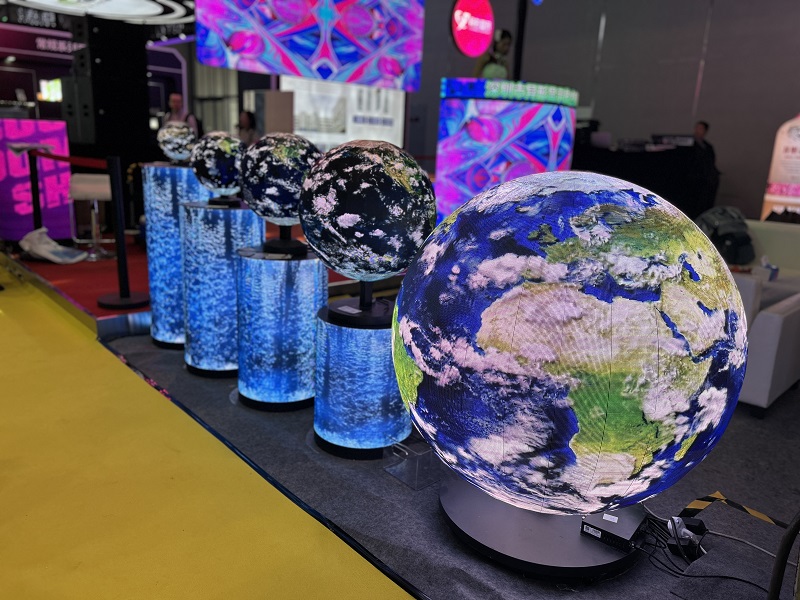
Before manufacturers ship any LED display—including spherical, cylindrical, wave-shaped, curved, or other irregular LED screens—they perform aging tests as a critical quality-control procedure. For irregular LED displays in particular, aging tests play an even more important role because these structures involve greater mechanical complexity and much higher reliability requirements.
1. Aging Tests Expose Soldering and Connection Defects Early
Irregular LED displays use non-standard module shapes, which makes the layout of PCBs, ribbon cables, and connectors far more complex than in conventional rectangular LED screens.
During a 48–72 hour full-load aging test, continuous operation generates thermal expansion and contraction inside the display. This process helps engineers identify hidden defects such as:
- Cold solder joints
- Weak or false solder connections
- Poor cable contacts
- Microcracks caused by uneven structural stress
Many of these issues remain invisible during normal room-temperature inspections. However, long-term operation can quickly turn them into dead pixels, flickering LEDs, or intermittent failures.
2. Aging Tests Reveal Heat Dissipation Problems
Irregular LED structures create uneven spacing, varying module orientations, and inconsistent airflow paths. As a result, certain areas may develop thermal hotspots.
Aging tests help verify:
- Whether poor heat dissipation accelerates LED brightness degradation
- Whether driver ICs remain stable under high temperatures
- Whether heat accumulation inside the irregular cabinet exceeds design expectations
By identifying overheating risks early, manufacturers can prevent premature component failure after installation.
3. Aging Tests Help Detect Optical Inconsistencies
Irregular LED displays usually combine many custom-made modules, often produced across different manufacturing batches. Even slight differences in LED brightness or color coordinates can affect overall image quality.
During the aging process, engineers can observe:
- LEDs with abnormal early-stage brightness decay
- Areas where brightness drops at inconsistent rates
- Potential color and uniformity issues across the screen
This inspection allows manufacturers to perform precise pixel-by-pixel calibration before shipment, reducing the risk of mura effects, mosaic patterns, or uneven visuals after installation.
4. Aging Tests Verify Electrical Reliability in Complex Structures
Compared with conventional flat screens, irregular LED displays typically require more complicated power distribution and signal transmission paths. Curved surfaces and customized structures introduce additional connectors, transfer points, and routing complexity.
Long-duration aging tests help confirm:
- Signal integrity under complex wiring conditions
- Stability of the power supply system under continuous heavy loads
- Whether structural stress has caused hidden electrical damage
This process ensures that the display maintains stable communication and power performance during long-term operation.
5. Aging Tests Reduce Future Maintenance Costs
Manufacturers often install irregular LED displays in difficult environments such as:
- Commercial complexes
- Theater stages
- Science museums
- Immersive exhibition halls
- Large architectural landmarks
Once installed, repairing even a single failed LED module may require high-altitude work, specialized disassembly procedures, or custom replacement parts.
Aging tests intercept early failures at the factory stage, which significantly lowers on-site failure rates and reduces long-term maintenance costs.
6. High-End Projects Demand Extremely High Reliability
Irregular LED displays frequently serve premium applications, including:
- Luxury retail flagship stores
- Immersive digital exhibitions
- Landmark media façades
- High-profile stage productions
In these environments, clients expect near-zero visible defects and uninterrupted performance.
As a result, aging tests serve not only as an internal quality-control measure but also as an important proof of product reliability. In many projects, passing aging tests has become a mandatory requirement during engineering acceptance and final delivery.
Conclusion
For irregular LED displays, aging tests go far beyond routine factory inspection. They function as a comprehensive stress-screening process specifically designed to address the challenges of:
- Complex structures
- Uneven heat dissipation
- Complicated electrical routing
- Difficult maintenance conditions
By eliminating potential failures before shipment, aging tests help ensure long-term stability, reliable operation, and consistent visual performance throughout the display’s service life.


