Will LED Display Screen Replace Cinema Projectors?
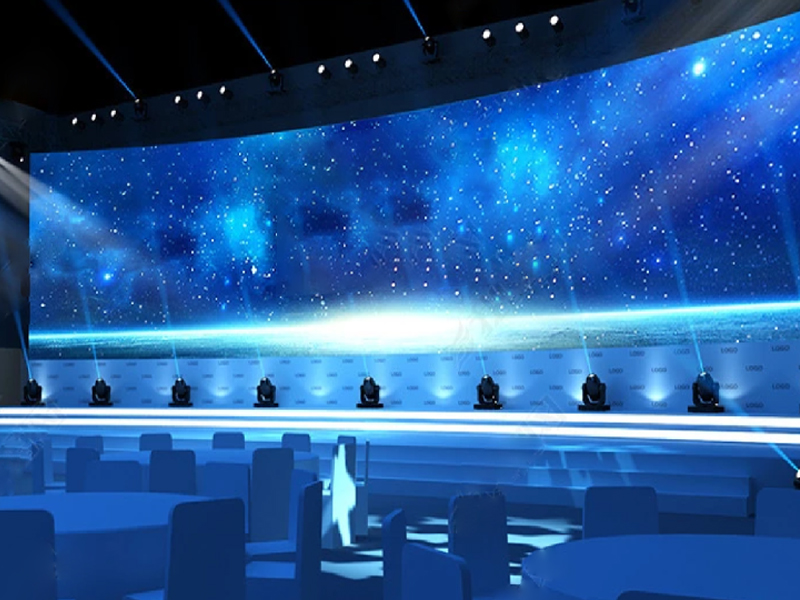
The cinema industry is entering a transitional phase. For over a century, projection systems have defined how audiences experience films. Today, however, direct-view LED cinema screens are emerging as a serious alternative. Major display manufacturers are actively promoting LED solutions for theaters, positioning them as the next evolution in visual performance.
But the critical question remains:
Will LED video wall actually replace traditional cinema projectors—or simply coexist as a premium niche solution?
This article breaks the topic down from a technical, operational, and economic perspective.
1. How Cinema Projection Works (Baseline Understanding)
Traditional theaters rely on a projection pipeline:
- Digital projector (DLP or laser)
- Reflective screen
- Behind-screen speaker system (acoustically transparent)
Key characteristics:
- Indirect light (reflected)
- Limited brightness (typically 48–108 nits)
- Mature and standardized ecosystem (DCI compliant)
This system is not perfect—but it is deeply optimized for cinema environments.
2. What Is an LED Cinema Screen?
LED cinema screens are self-emissive displays, meaning each pixel generates its own light.
Core differences:
| Feature | Projector | LED Screen |
|---|---|---|
| Light source | External | Self-emissive |
| Brightness | Limited | Very high |
| Contrast | Moderate | Extremely high |
| Structure | Light + screen | Modular panels |
In essence, LED transforms cinema from a projection system into a giant high-end display.
3. Where LED Clearly Wins
3.1 Superior Brightness and HDR Capability
LED screens can achieve significantly higher brightness levels than projection systems.
- Better visibility in bright scenes
- True HDR capability
- Improved color volume
This is particularly impactful for:
- Action films
- Animated content
- High dynamic range mastering
3.2 Perfect Black Levels and Contrast
Because LEDs turn off completely:
- True black (not dark gray)
- Infinite contrast ratio
- Enhanced shadow detail
This creates a more vivid and “punchy” image compared to projection.
3.3 Uniformity and Image Stability
Projection systems degrade over time:
- Lamp aging
- Optical misalignment
- Screen wear
LED avoids these issues:
- Consistent brightness across the screen
- No focus drift
- No lamp replacement
4. Where LED Struggles
Despite the advantages, several structural challenges prevent large-scale adoption.
4.1 Extremely High Initial Cost
This is the primary bottleneck.
Cost drivers:
- Fine pixel pitch (P1.2–P2.5 for cinema)
- Massive screen area
- Control systems and redundancy
In many cases:
- LED installation cost = 3–10× a projection system
For theater chains operating on thin margins, this is a major deterrent.
4.2 Audio System Conflict (Engineering Constraint)
Traditional cinema audio depends on:
Speakers placed behind an acoustically transparent screen
LED screens are not transparent, which creates a problem:
- Sound cannot originate directly from the image plane
- Audio must be repositioned (above, below, or around the screen)
Impact:
- Reduced spatial accuracy
- Weaker dialogue localization
- Compromised immersion
This is not a minor issue—it fundamentally affects cinema sound design standards.
4.3 Power Consumption and Thermal Load
LED systems introduce significant operational overhead:
- Higher energy consumption
- Substantial heat generation
- Increased HVAC requirements
Result:
- Higher operating expenses (OPEX)
- More complex theater infrastructure
4.4 Maintenance Complexity
Unlike projection (single device), LED is modular:
- Thousands of panels
- Millions of LEDs
Failure scenarios:
- Dead pixels
- Color inconsistency
- Module failure
Even small defects can be visible, especially in dark scenes.
4.5 The “Cinema Feel” Debate
Beyond engineering, there is a perceptual factor:
Some viewers argue that:
- Projection feels “cinematic”
- LED feels like an oversized TV
This perception is tied to:
- Light reflection vs emission
- Image softness vs sharpness
- Historical familiarity
While subjective, it influences audience acceptance.
5. Use Cases Where LED Already Makes Sense
LED is not universally impractical—it excels in specific scenarios:
5.1 Premium Theaters (PLF – Premium Large Format)
- Luxury cinemas
- High ticket pricing
- Differentiated experience
5.2 Boutique & Private Cinemas
- Small screening rooms
- Corporate or VIP environments
5.3 Multi-use Spaces
- Esports
- Live events
- Presentations
LED’s flexibility provides multi-function ROI, unlike projection.
6. Will LED Replace Projectors? (Strategic Outlook)
Short Answer:
No—at least not in the foreseeable future.
Long Answer:
LED will likely follow a segmented adoption model:
6.1 Projection Will Remain Dominant
- Lower cost
- Established infrastructure
- Proven audio integration
6.2 LED Will Grow in High-End Segments
- Premium experiences
- Flagship theaters
- Brand-driven venues
6.3 Hybrid Ecosystems Will Emerge
Cinema chains may deploy:
- Projection for standard screens
- LED for flagship auditoriums
7. Conclusion
LED cinema screens are not a gimmick—they are a technically superior display technology in terms of image performance.
However, cinema is not just about visuals. It is a system-level experience involving:
- Audio engineering
- Economics
- Audience psychology
Until LED solves cost efficiency and audio integration at scale, it will complement—not replace—traditional projection.
8. Key Takeaways
- LED delivers unmatched brightness, contrast, and image stability
- Audio system limitations remain a major technical hurdle
- High CAPEX and OPEX slow adoption
- Best suited for premium and multi-use environments
- Projection will remain the industry standard in the near term


