Wine Bottle Shaped LED Display Module Replacement: How to Maintain Color and Structural Consistency
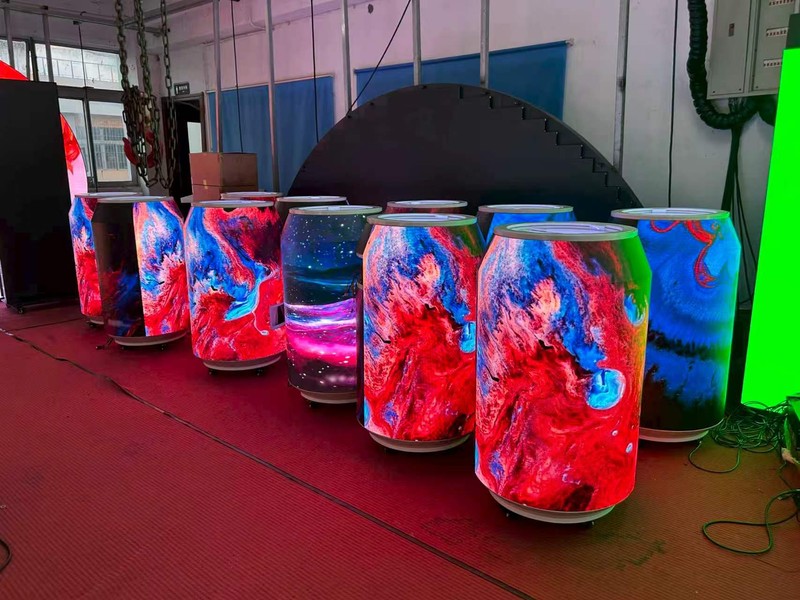
A wine bottle shaped LED display is designed to attract attention through its unique appearance. It is often used in wine exhibitions, shopping malls, brand showrooms, retail stores, and commercial events. Unlike a standard flat LED screen, its curved body, narrow neck, and customized outline make every module important to the overall appearance.
However, module replacement can become a challenge after long-term operation. A replacement module may display a slightly different color, create visible gaps, or fail to match the original bottle shape. Even a small difference can affect the entire display.
So, how can buyers and maintenance teams replace a wine bottle shaped LED display module without changing its original color and structure?
1. Why Does Module Replacement Require Special Attention?
Replacing a module on a standard LED screen is relatively straightforward because most modules have regular shapes and fixed dimensions. A wine bottle LED display is different.
Its screen surface may include curved sections, different angles, and specially designed module positions. Each section must follow the original design.
When a module is replaced, the new one must match three important conditions:
- Color consistency: The replacement should have similar brightness, color temperature, and grayscale performance.
- Structural consistency: Its dimensions, curvature, and mounting position must match the surrounding modules.
- Display continuity: Images and videos should move smoothly across the replaced area without visible boundaries.
Ignoring these details can make the repaired section stand out from the rest of the screen.
2. What Problems Can Incorrect Replacement Cause?
A poorly matched module can create several problems.
First, color differences may appear when the screen displays white, gray, or other solid colors. One section may look brighter or slightly warmer than the surrounding area.
Second, incorrect module dimensions or installation angles can create uneven gaps along the curved surface. This is especially noticeable around the bottle neck and shoulder.
Third, poor alignment may interrupt image continuity. Logos, product pictures, and promotional videos may appear distorted when they cross the repaired section.
For wine brands, these details matter because the display is part of the product presentation. A screen with visible repair marks may reduce the overall quality of the exhibition.
3. Why Do Color and Structural Differences Happen?
There are several common reasons.
Different LED production batches: LED lamps from different batches may have small differences in wavelength, brightness, and color temperature.
Aging differences: Existing modules have already operated for a period of time. Their brightness may have decreased, while a new module may produce stronger light.
Incorrect module specifications: Modules with different pixel pitches, LED configurations, or driving parameters may not perform consistently.
Installation deviations: A replacement module with incorrect dimensions, mounting depth, or connection positions may not follow the original curved surface.
These issues should be considered before ordering replacement parts.
4. How to Replace Modules Without Affecting the Original Design
A reliable replacement process should begin with accurate identification.
Step 1: Record the original module position
Before removing a damaged module, record its position, orientation, dimensions, and connection method. Taking photos of the surrounding area can also help prevent installation mistakes.
Step 2: Match the technical specifications
Check the pixel pitch, LED lamp type, PCB design, driving IC, and module dimensions. Using the same specifications as the original modules helps reduce compatibility problems.
Step 3: Check color performance
If possible, select replacement modules from the original production batch. When this is not possible, compare brightness and color temperature with the existing screen before installation.
Step 4: Follow the original curvature
Install the replacement according to the original mounting structure. Check the distance between neighboring modules, surface height, and connection points.
Step 5: Complete calibration
After installation, adjust brightness, grayscale, and color balance through the control system. The goal is to make the repaired area visually consistent with the surrounding display.
5. What Tests Should Be Completed After Replacement?
A replacement should not be considered complete simply because the screen turns on.
Several checks are recommended:
- White balance test: Display a full white image to identify brightness and color temperature differences.
- Grayscale test: Check whether the repaired area matches the surrounding modules at low and medium brightness levels.
- Color test: Display red, green, blue, and mixed-color images to identify uneven color performance.
- Alignment test: Use grid patterns and straight lines to check module positioning and image continuity.
- Video playback test: Play actual promotional content to confirm that the bottle shape and displayed images look natural.
The screen should also be checked after a period of continuous operation to identify possible connection or temperature-related problems.
6. Which Components Should Be Considered During Replacement?
A wine bottle shaped LED display usually requires more than standard LED modules.
Important replacement components include:
- Customized LED modules: Designed to match the bottle's curved or specially shaped surface.
- Mounting brackets: Maintain the correct position and installation angle.
- Connecting cables: Ensure stable power and signal transmission.
- Power supply units: Provide suitable and stable electrical output.
- Control system: Supports image adjustment, brightness control, and display calibration.
For long-term maintenance, buyers should keep several compatible spare modules and record their specifications. This makes future repairs faster and reduces the risk of using unsuitable replacement parts.
7. A Practical Replacement Scenario in Commercial Displays
Consider an indoor wine bottle LED display installed in a wine brand showroom.
After extended operation, several modules around the bottle shoulder begin to show abnormal pixels. The maintenance team decides to replace only the affected sections rather than the entire screen.
Before replacement, they record the original module positions and check the available spare parts. The new modules are compared with the existing ones for pixel pitch, brightness, and color performance.
After installation, the team checks the bottle's curved outline and adjusts the display parameters. White balance, grayscale, and promotional video tests are then completed.
This approach helps maintain the original appearance while avoiding unnecessary replacement costs.
8. Frequently Asked Questions
Q1: Can I replace only one damaged module on a wine bottle LED display?
Yes. If the replacement module is compatible with the original design and control system, individual module replacement is usually possible.
Q2: Why does a new module look brighter than the old ones?
New LED lamps may have higher brightness than aged modules. Brightness adjustment and color calibration can help reduce this difference.
Q3: Should replacement modules come from the same manufacturer?
It is recommended. Using modules from the original manufacturer makes it easier to match dimensions, electrical specifications, and structural design.
Q4: How many spare modules should buyers prepare?
The quantity depends on screen size, operating frequency, and project requirements. Keeping a small stock of compatible spare modules is a practical starting point.
9. Why Choose TOOSLED for Customized LED Displays?
A wine bottle shaped LED display requires careful planning, from module design and structural fabrication to installation and maintenance.
TOOSLED focuses on customized LED display solutions, including shaped LED screens and other special-structure displays. From the initial design to production and technical support, each stage needs to consider the screen's appearance, module compatibility, and long-term maintenance requirements.
For buyers planning a new wine bottle LED display or replacing existing modules, TOOSLED can help evaluate the display structure, confirm module specifications, and discuss suitable replacement solutions.
A successful replacement is not just about making a damaged module work again. It is about keeping the entire screen looking and performing as one complete display.


